
By TR Robertson
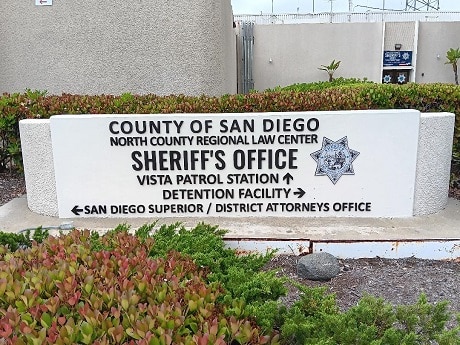
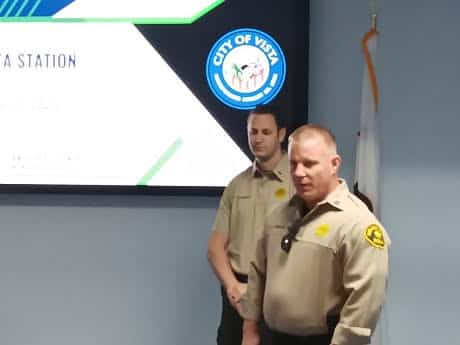
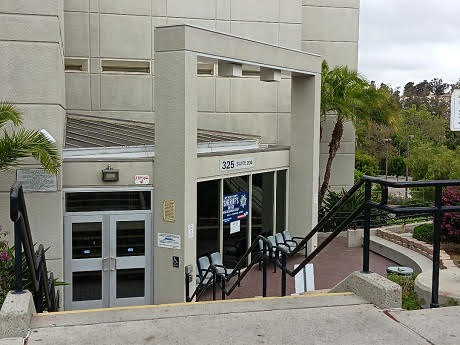
The seventh session of the Vista Leadership Academy was a fascinating, informative and eye-opening presentation by the Vista Sheriff’s Department, which included a tour of the Vista Detention Center, a.k.a. the Vista Jail. The Leadership Academy group met in front of the Sheriff’s Department, located next to the Vista Superior Courthouses at 325 S. Melrose Drive. The three deputies that would be speaking to us met us just outside of the Sheriff’s Office and accompanied us inside and led us down to the lower level to a meeting room for the initial presentation. Vista Sheriff’s Deputies Morelia, Rodriguez and Kaapke and Patrol Lieutenant Zarnow spoke to our group and led us through a power point presentation about the various departments within the Sheriff’s Office. They began the presentation with each one telling our group why they joined the Sheriff’s Office and how they ended up working out of the Vista Station. Most had worked at other stations before transferring to the Vista Station. Deputy Kaapke also introduced Sheriff Captain John Malan. Captain Malan explained that the Vista Sheriff’s station has no holding cells in the Jail because the Sheriff’s Station is attached to the Detention Center, a unique feature. He also said their relationship with the City of Vista has never been better and there has not been a lot of change since he took over, as the department was well run by former Captain John Boyce. He also explained that the Vista Sheriff’s Department also assists in the unincorporated areas around Vista and in the Bonsall, Fallbrook and Rainbow areas when needed. There are deputies stationed in the Fallbrook Station.
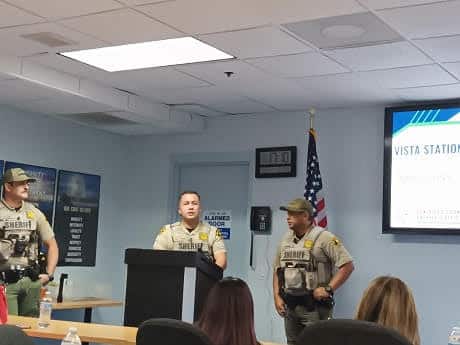
Continuing the powerpoint presentation, Deputy Kaapke pointed out that in addition to the Captain there are 2 lieutenants, 9 sergeants, 76 deputies, 8 professional staff and 27 volunteers (mostly made up by the Senior Volunteer Patrol). The Patrol Department is made up of 38 deputies and 4 sergeants. In 2024 this department handled 30,528 calls for service as well as 14,581 DIA’s (Deputy Initiated Actions). The Traffic Department uses 7 vehicles and 4 motorcycles and some of the 2024 statistics saw this department making 271 DUI arrests (by one DUI officer), issuing 3,574 citations, assisting with 221 injury collisions and 296 non-injury situations. The Area Detectives Department has 1 sergeant, and 9 detectives assigned. In 2024, 6,500 cases were received for further investigation. There were 85 4th Amendment investigations, and 74 search warrants served as well as 50 illegal firearms seized. Some of the cases this department deals with includes gun seizures, Federal adoption cases, bail enhancements and follow-ups to all cases they receive. In the COPPS Division (Community Oriented Policing and Problem Solving) there is 1 sergeant, and 7 deputies assigned. Several major issues this department deals with surrounds homelessness issues, retail theft and the Junior Deputy Program. Some of the 2024 statistics includes 143 field interviews, 174 4th Amendment waiver contacts, 608 unhoused contacts, 136 homeless operations, 140 Clean-up operations (working with Vista Public Works), and 12 successfully housed individuals. The Get Division (Gang Enforcement Team) has 1 sergeant and 6 deputies. This department deals primarily with violent crimes and gang activity in Vista. The deputies speaking to us today were in the GET Division. Some 2024 statistics included 327 arrests, 93 gang-related issues, 84 probation situations, 319 investigation contacts and this department had narcotic seizures of 2,435 grams of methamphetamine and 185 grams of fentanyl. The final division was the SNGT (Street Narcotics Gang Team) of 1 sergeant and 3 detectives. The 2024 statistics showed 200 known gang members in Vista. They also had dealt with 40 gang related cases and 10 gang cases reassigned for area investigations.
The Volunteer Sheriff’s Patrol is some 27 strong and is part of the more than 700 Volunteer Sheriff’s in San Diego County, started in 1994. This group assists with home vacation checks, visiting homebound individuals (a YANA – You Are Not Alone – Program), enforcing handicapped regulations, making public presentations and helping conduct security surveys as well as assisting at various community activities like the Strawberry Festival. Individuals 50 years of age and older can sign up for the program. For more information and regulations go to www.sdsheriff.gov/recruitment/senior-volunteer-patrol. The Sheriff’s Department is involved with a few Community Outreach programs like the Junior Deputy Program and many more. In 2024 the Sheriff’s Department responded to 30,000 calls for service and made over 3,000 arrests for a variety of violations. The officers’ said Vista is a very busy station, and they are all proud to be a part of being at the Vista Station.
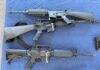
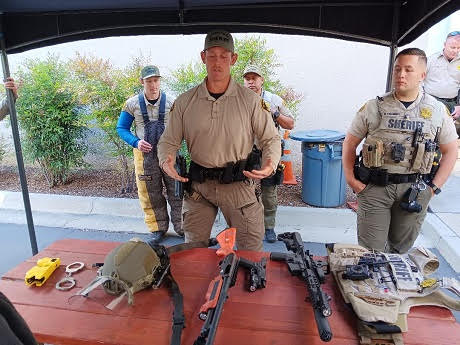
Moving outside, in back of the Sheriff’s Offices, Deputy Fuston gave a demonstration of the “gear” each of the sheriffs are assigned. Deputy Fuston has been at the Vista Station 2 years, after serving 4½ years with the San Diego Police Department. He began his presentation showing the Kevlar vest each deputy wears and the various pockets for all of the gear they are assigned. Next was the rifle each has in their patrol cars, an AR-15 rifle with a sound suppressing muzzle. He showed the Glock 22 pistol each deputy sheriff is issued. The next piece of equipment shown was the Bean Bag Shotgun. Deputy Fuston explained this is used only to bring down a fleeing suspect to incapacitate them rather than shoot them with a pistol or a rifle. The officers are also assigned a helmet that can be worn when safety is required, especially in large crowd disturbances or in a sheriff’s response situation. He said the helmet is a new style with a flashlight attached, face guard and is more comfortable than the previous style issued. The Deputy demonstrated the handcuffs they carry, and the final piece of equipment shown was the tasers they are assigned. The Deputy explained the tasers are effective in incapacitating an individual who is aggressive and threatening and unresponsive to sheriff’s directions. The taser creates a Neuro Muscle Incapacitation (NMI) when the two prongs hit the suspect. Deputy Fuston also demonstrated how the equipment is worn, stating each deputy has a different way of wearing each of these pieces of equipment they have with them at all times. He also explained that traffic stops, and domestic disturbances, are the two most dangerous situations for each deputy on patrol. Deputy Fuston explained the safety techniques they follow and under what conditions they use each of the pieces of equipment. He said the main concern is to seek compliance with the most minimal amount of force needed. They also go through a yearly certification and most of the deputies go to the gun range multiple times. He emphasized that the deputies in the Sheriff’s Office emphasize the highest standards for each officer to follow.
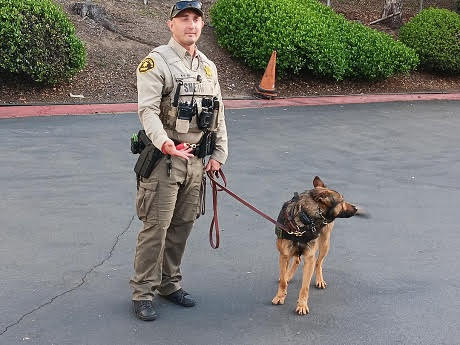
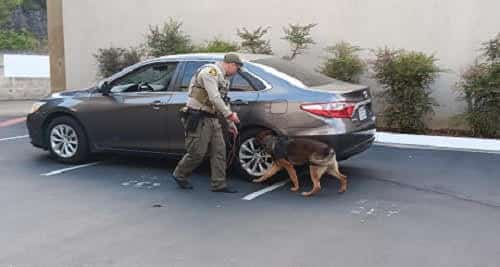
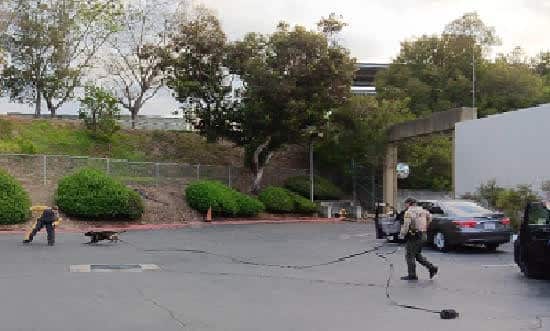
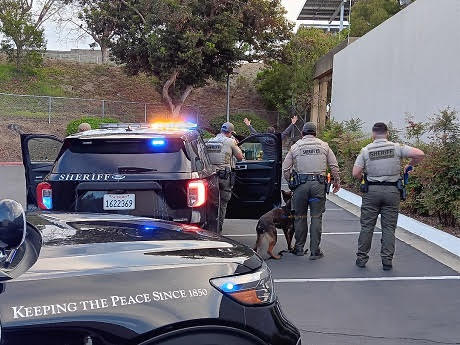
Our next demonstration was by Deputy Kafkas and Deputy Resendizk and the Sheriff’s K-9 Unit. Deputy Kafkas dog is Pedro, a 2½ year old German Shepard from Hungary. Pedro is trained as a Narcotics Dog, capable of detecting narcotics quickly in response to a free-air sniff for probable cause arrests. He showed how Pedro can detect narcotics that were hidden in a parked car. Pedro quickly sniffed out a bag of methamphetamine that had been hidden in a small metal box under the wheel carriage area. Pedro’s reward was to rush back to his favorite pull-toy, a Kong rubber toy. Deputy Resendizk’s dog was a German Shepard named Chivas. Chivas is used in hot-stop situations when a suspect is fleeing, perhaps after a vehicle pursuit or searching out a suspect in a building. The purpose is for the save apprehension of a suspect rather than using extreme force such as having to shoot the fleeing suspect. Using one of our Leadership Academy members, Sergio, the Deputy demonstrated stopping the fleeing car, making an arrest of a suspect (Sergio) and apprehending a fleeing suspect, a Sheriff’s deputy wearing a protective suit. Chivas quickly responded, grabbing the felling suspect by the arm and bringing him down, releasing him once the Deputy caught up with the suspect. Deputy Resendizk explained that using these K-9 dogs protects both the Deputies and the suspect rather than having to use extreme responses like weapons, in apprehending someone who is fleeing from an incident. Deputy Fuston also explained that the K-9 Unit is an important part of the department, and the City of San Diego found that eliminating their department several years ago resulted in more officer involved shootings and violent situations. The San Diego Police have since reinstated their K-9 Unit.
After the demonstrations, our group moved to the Vista Detention Center, a.k.a. The Jail, for what would be a very thorough tour through the majority of the different aspects of what it is like to be incarcerated in this facility. Our guide for this tour was Sheriff’s Deputy Lance Tade, who served 16 years with San Diego and for the last 2½ years in Vista. Deputy Tate said there are currently around 730 in the facility at this time. When asked how many men could be locked up, he said he didn’t know the exact number but imagined it would be around 900. Deputy Tade did say this Detention Center was built in 1978 and expanded in 1989, and its age is beginning to show. He said he hopes a new Detention Center is on the books for a near-future project. He also said the weekend tends to be a bit busier than other days for booking and holding suspects. Our tour began in the area of the Detention Center where patrol cars arrive with the individuals who have been arrested and brought to begin the booking process. This area is extremely secure with massive metal gates for entrance and exit. We were accompanied on the tour by an additional 5 Sheriff’s deputies. The process of booking begins just outside of the entrance doors to the facility with the suspect being asked a series of questions and being told why they have been arrested. As we entered the facility, distance between areas is short with lots of locked doors. There are rooms just inside the entrance used for what is called Caretaking Arrests, such as being drunk in public, where the individual being brought in can sleep things off until they can be booked, released or make bail. Those brought in are then checked medically to see if they are fit to be in the Jail. They have a picture taken, all info on the individual is gathered on the computers, a wristband is issued, and a full body scan is taken. All individuals going through the arrest process also have access to a phone for the first 3 hours they are going through the booking process. Along the way the Safety Cell was pointed out where individuals in danger of hurting themselves are monitored. Other cells are the holding cells where individuals trying to make bail are held. There is also a Strip Search Room and the Booking Staff area where additional information is gathered and explained to the individual being booked. The fingerprinting system is now electronically used. In Holding 5 the individual’s prior history is completed. Moving on down the hallway, the medical staff area was pointed out as well as the fact that a qualified mental health examiner is available. Just down from this is a bare bones Rec area. From here we entered the first set of modules we would see, each numbered. In the center is a Sheriff’s monitoring station with various surveilling methods to watch the prisoners. Each module area here, we were told, is for low level offenders on two levels with an area to mix on the lower level and jail cells along the upper and lower back walls. There is a phone in each module where each inmate is allowed around 10 minutes on the phone. One of the modules in this area has received National Recognition for the Vista Detention Center, a module specifically for Veterans. In this module there was a large, big-screen T.V., large banners of the different branches of service hanging on the walls and the veteran inmates have access to counseling by veteran’s affairs specialists as well as other advantages that are offered to the veterans. The further study of these veteran inmates shows after their release they have a 10-15% repeat offender rate compared with a 60% repeat offender rate of other inmates when they are released. Deputy Tade said the inmates in this module for veterans are the most well-behaved of all of the prisoners in the detention center, primarily because of the privileges they receive. Other inmates do receive a chance for high school equivalency classes and some additional online courses. There were acoustic guitars on the wall that could be checked out close to the Sheriff’s monitoring area. The further we moved through this part of the detention center the higher the level of crime the inmates were guilty of. There is an outdoor level designed on the second level of the detention center where prisoners do get some outside time in the fresh air each week. When problems do arise and a lock-down occurs to deal with the problem and reduce tension the modules go on a 48-hour lock-up. We were told the detention center was not designed for long-term stays, but recent state legislation has changed and now some who have committed major crimes are sentenced to local jail time, rather than transfer to a prison. According to Deputy Tade, one of the trustees he knew of has been in the Vista facility for over 6 years. We also passed by a large area of phones on Plexi-glass window cubicles separating the inmate and any visitors they may have. There are designated times when visitors are allowed to speak to the inmate on these phones.
Moving further along, after taking an elevator up one level, we saw facilities designed for major crime inmates and cells for inmates who had either been involved in fighting, were members of gangs that couldn’t get along with one another or simply an individual that could not stay out of trouble in the larger mix of the modules. This is referred to as Administrative Separation. Further along we passed by a section designed to hold individuals sentenced for crimes against children or women, considered by most prisoners the worst people to be around in jail settings. Also, individuals who are gang dropouts have to be separated from potential gang members for their protective custody. As we exited this part of the detention center, we passed by the dental and medical offices where doctors and nurses contracted by the county provide medical and dental care. Close to this was the large kitchen where trustees work alongside the cooks preparing three meals a day for all inmates. Other holding cells in the detention center are additional small disciplinary cells used when an inmate can’t “behave” while in custody and dorm style housing with bunk beds, in one of the oldest parts of the jail. There is also a long, narrow section with tables along the Plexi-glass wall and cells on the back wall that is referred to as the section for the “old & feeble”. Here we passed by several elderly inmates in this area. Deputy Tade didn’t know what crimes these inmates had been sentenced for. As we headed toward the end of this tour we passed the medical observation rooms used when inmates were ill and counseling offices were nearby. Taking an elevator back down to level one, we began our journey through the maze of narrow hallways, returning to the preliminary booking room where we had entered. Deputy Tade said that women inmates are housed in another location. For most everyone in our Leadership Academy group this was an unimaginable experience and one not soon forgotten. It is amazing to think of what the staff and law enforcement assigned to work in this part of the judicial system have to deal with each day and what they try to accomplish, and it is occurring right here in our city. The individuals sentenced here have made choices that landed them here. You wonder if many of them knew what life was like in the Vista Detention Center, if they would have made a different decision in their life. This tour provides a glimpse of those that put their life on the line to protect us and enforce the rules we live by and into a part of our society the majority of us will never know.
Next up for the Leadership Academy, another group of individuals that put their lives on the line every day, the Fire and Emergency Response and Prevention Services.