
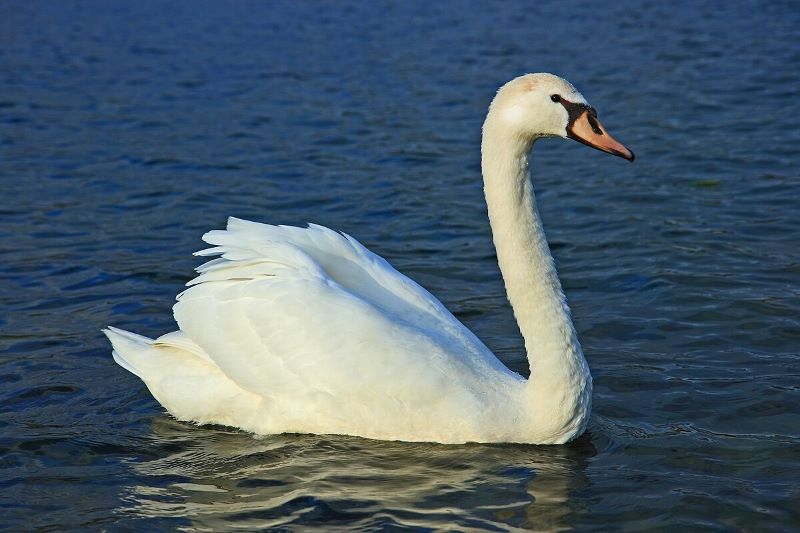
On an early August morning, it didn’t take long to spot the first pair of huge white swans with orange and black bills and graceful, curving necks as they swam in the marsh along the side of a Solano County levee road.
They dabbled in the vegetation as a pickup drove through the Grizzly Island Wildlife Area. A short drive later, past a herd of a dozen tule elk, two more swans appeared in the marsh alongside the dirt road. Then four more. A few hundred yards down the road, out in the distance past a thicket of swaying reeds, dozens of swans swam in the water.
For casual bird watchers, the sight of all these majestic animals might be a pleasure and bring to mind swan-themed works of literature, such as “Leda and the Swan” and “The Ugly Duckling.”
But for wetland biologists and others with a stake in the health of the surrounding Sacramento-San Joaquin Delta, the largest estuary on the West Coast, the birds represent the latest – and an exponentially growing – threat to the few remaining wetlands left in California.
These are mute swans, native to Europe and Asia. Weighing up to 30 pounds and with a wingspan of up to eight feet, they’re the biggest bird in the marsh, and they’re not the least bit shy about throwing their weight around.
Fiercely territorial, especially during breeding season, they’ve been known to drown smaller animals and have killed at least one American kayaker. They’ve displaced colonies of nesting native birds in other parts of the U.S. they have invaded. Mute swans also feed gluttonously on submerged vegetation, destroying the plant life on which other native wetland species depend.
“They might be a pretty, big, white bird … and they may be charismatic, but they can be…..