Falkirk Wheel-Helix Park and the Kelpies-Edinburgh Royal Mile and Military Tattoo
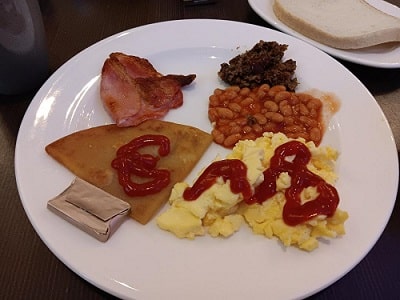
Awakening in our very comfortable rooms, in the four-star Voco Grand Central Hotel, we enjoyed an easy morning with the breakfast buffet open from 7am until 10 am and our coach (bus) scheduled to depart at 11 am for a full day of excursions. Breakfast in the Tempus Restaurant offered everything from cereals to porridge (oatmeal) to a full selection of items complete with enough things to build a Scottish Traditional Breakfast. This would basically consist of scrambled eggs or poached eggs, ham, link sausage or Lorne sausage (square), tattie scones (potato), fried mushrooms, grilled tomato, black pudding (blood sausage in some countries), baked beans, haggis, toast and coffee or tea. I tried everything except the black pudding. I had it the last time we visited and found it was not to my taste. The coffee came from a wonderful machine that produced an assortment of flavors. After breakfast Brian and I decided to take a little tour of the hotel and take in a little more of the Grand Central Station area.
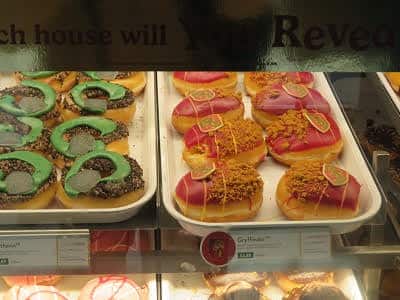
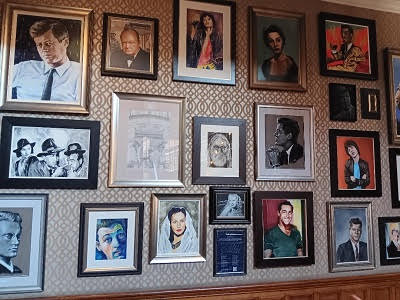
The hotel has been the location for a number of movie and music stars as well as U.S. Presidents when they had visited Glasgow. There is a Wall of Stars on the 1st floor stairway area with pictures and paintings of dignitaries that go back in time like JFK, Mick Jager, Buster Keaton, Gene Kelly, Winston Churchill, Roy Rogers, Viviene Leigh, Frank Sinatra and many more. We wandered out the back hotel entrance into the Grand Central terminal and saw hundreds of people waiting in line to catch their particular train to whatever part of Scotland they were traveling to and hundreds more arriving in Glasgow heading off to their work location. There were quite a few school children in their traditional school uniforms waiting in line to board. We walked past several stores selling items perfect for a quick morning breakfast or to purchase for lunch later in the day. Almost every store sells coffee or tea. Costa Coffee was a popular stop. We found a Krispy Kreme selling donuts decorated with various houses from the Harry Potter stories. We decided to purchase a few donuts to save for tomorrow morning to add to our breakfast the next day. Brian bought a Gryffindor themed donut, very colorful and cleverly decorated.
We then walked outside of the Grand Central Station passing by a large monument at the exit dedicated to the railroad workers, who had died during WW II, with a long list of names carved into the monument. We found a number of Robertson names listed. Exiting the station, we decided to take a walk around the block where the station and hotel are located. We walked down to Argyle Street to see the famous Highlandman’s Umbrella, the large glass walled overpass structure that crosses Argyle Street. It supposedly received its name from “displaced” Highlanders who use to take refuge under the train overpass in inclement weather. We walked under the structure to the street running along the other side of the train station where we found numerous fast food restaurants like Taco Bell, Pizza Hut, KFC, Subway and of course McDonald’s. When I travel, I generally always stop in a McDonald’s to see what is unique to their menu. The only thing I noticed was three different selections of porridge, some with jam. There have been some unusual items like black beans and rice in Costa Rica and of course a Spam breakfast offered in Hawaii. We wandered down the block, cutting across through the Central Station to our hotel entrance, making sure we had what we needed for the start of our tour today.
Boarding our bus, a quick head count by Brian Caldwell, our tour director, and off we drove, going through Glasgow on the way to see our first stop, the Falkirk Wheel. Along the way Brian, our tour guide, filled us in with information about Glasgow as this is the town he grew up in before moving, at age 22, to the United States. He occasionally filled us in on the proper Scottish terminology for various items, such as we were in a “coach” not a bus. He said in the 60’s and 70’s Glasgow was struggling economically as the shipping industry was in a downturn. He said in the 80’s things began to pick up and growth began all around the city. As we drove through the city it was obvious this is a very hilly city situated around the River Clyde. There were a number of large murals on the buildings around the city, we would learn more about these later. As we began to exit the city another Scottish word popped up, we were now on motorways, not highways. The name Glasgow originated from the Brittonic language meaning “green hollow”. Glascou would evolve in the Galic Glaschu, meaning “the dear green place”. The name Glasgow would appear in 1116 as the name of the settlement that grew around the Church of Saint Kentigern. Today there are several Churches of St. Kentigern in Glascow.
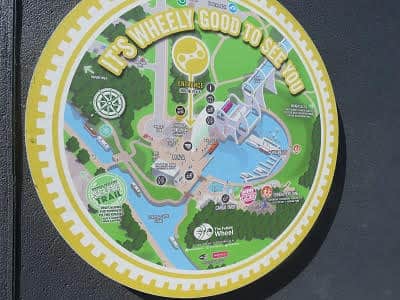
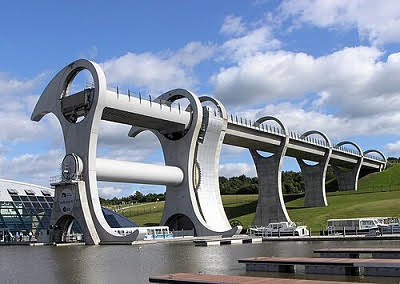
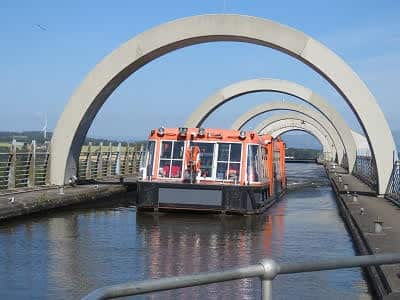
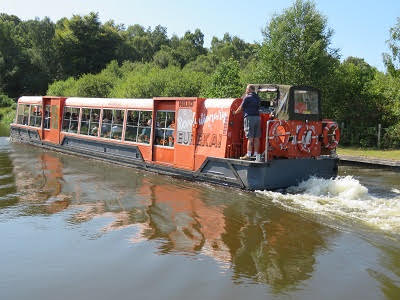
Driving down the motorways and the side roads we passed familiar businesses I remembered from previous visits, like the Tasco Department stores, resembling our Walmart. There are also roundabouts everywhere along the way. We passed trash trucks; the workers are referred to as “bin men”. After about half an hour we approached the massive Falkirk Wheel, the only rotating boat lift in Tamfourhill, Falkirk, Scotland. The Wheel connects the Forth and Clyde Canal with the Union Canal. The Wheel opened in 2002 as part of the Millennium Link Project and is considered an iconic engineering marvel. The structure stands 79 feet tall and offers visitors a chance to ride in a canal boat from the Visitors Center to the top canal and take a short ride down the canal through a tunnel. We stayed at the Falkirk Wheel long enough to see the operation of the wheel structure lift as one canal boat moved from the Visitor’s Center with another canal boat at the top rotating down.
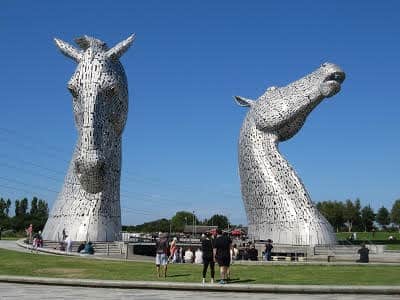
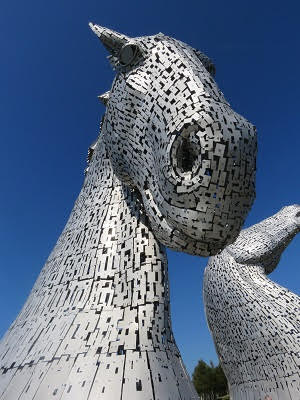
From the Wheel we boarded our bus and traveled a short distance to our next stop, the Kelpies. The Kelpies are located in Helix Park and are a pair of monumental steel horse heads standing 98 feet tall. The statues were designed and built by Andy Scott, completed in 2013. They can also be seen from the M9 Motorway and the train between Glasgow and Edinburgh. They are dedicated to the Clydesdale draught horses of the early Scottish industry used to pull wagons, barges and coal ships on the canal system. They also represent the mythological transforming beasts that were said to possess the strength of 10 horses. A very nice gift shop had lots of Kelpie memorabilia.
After a stop of around an hour, back on the bus and on the road to the Royal Mile of Edinburgh and the Edinburgh Military Tattoo. Edinburgh is the capital of Scotland, and the name comes from a Brittonic term, Din Eidyn, a hillfort meaning fort of Eidyn when the Angles conquered this area in the 7th century. They would later adopt the name from Old English as Edinburgh. This time of year, Edinburgh is a very busy place with thousands of people visiting to not only see the military performing groups at the Tattoo, but also to take part in walking the Royal Mile and seeing participants in the annual Fringe Festival.
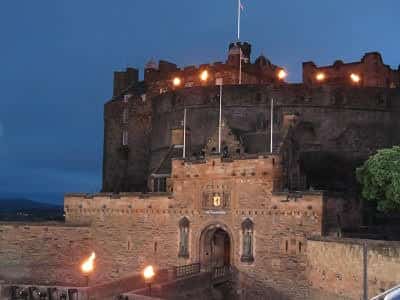
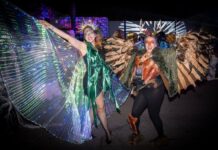
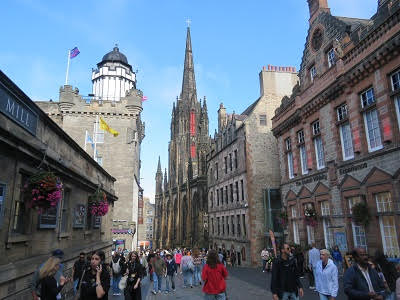
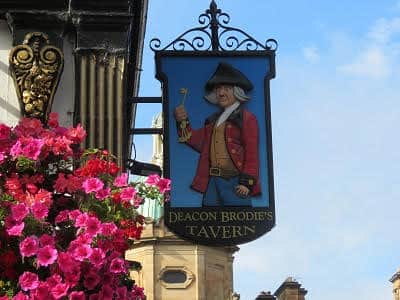
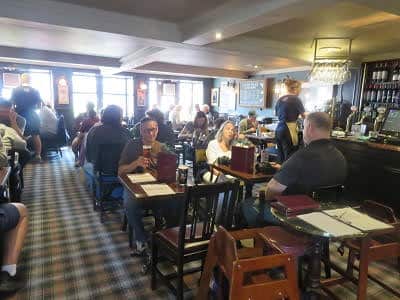
The Royal Mile runs through Edinburgh’s Old Town from Edinburgh Castle to the Palace of Holyrood house. It features historic buildings, shops, restaurants and traditional pubs along Cobblestone Streets and 18th century buildings. We had a great lunch at Deacon Brodie’s Tavern, eating in Nicholson’s Pub above the Tavern. The building was built in 1873. The Deacon was a respected city councilor, cabinet maker by day and a scheming gambler and thief who was finally caught trying to rob the city. He was hung on gallows he had supervised for improvements. I enjoyed British Steak Pie and Brian had a Bacon Cheeseburger with Nicholson’s Pale Ale. I chose Timothy Taylor Ale, from a brewery that started in 1858. Many people tour Edinburgh Castle while here as well. The Fringe Festival started in 1947 featuring performers who weren’t invited to attend the main Edinburgh International Festival. They put on their shows around the edges, or fringe, of the main event. Today it is called the biggest arts festival in the world. It features musical theatre, dramatic plays, musicians, comics, magicians, acrobatic acts and more. Street performers on the Royal Mile put on shows for crowds, at times asking for tips. Many entertain the crowd to entice people to attend other performances in locations scattered around Edinburgh. In 1971, Robin Williams performed at the Fringe with his student theatre company.
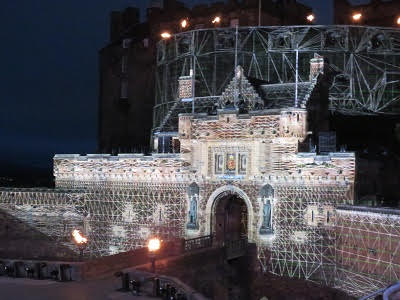
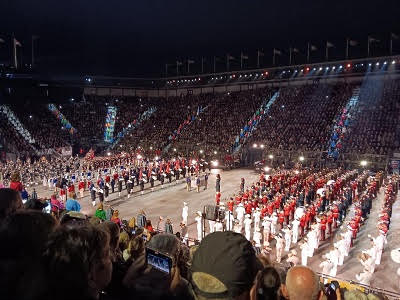
After some shopping and gathering back at Deacon Brodie’s, our group walked to the Edinburgh Esplanade parade grounds to take our seats for the Tattoo. The Esplanade dates back to 1753 and is at the front of Edinburgh Castle. The castle sits on Castle Hill and is now a military garrison since the 17th century. There has been a castle on Castle Hill since the 11th century. The castle is also the home of the Honours of Scotland, the Scottish Crown Jewels, the regalia of Scottish Monarch’s wear at their coronation and are the oldest surviving crown jewels in the British Isles.
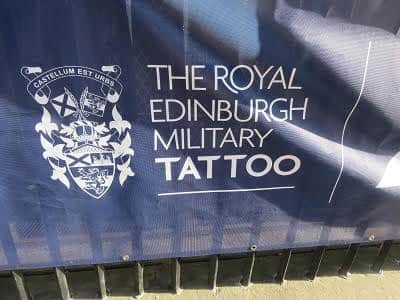
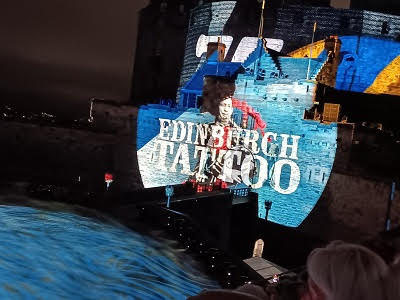
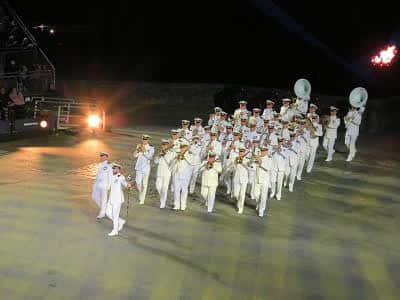
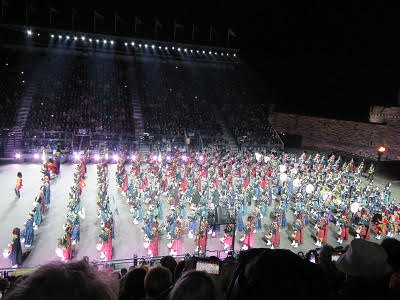
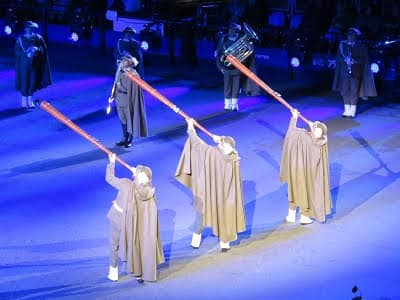
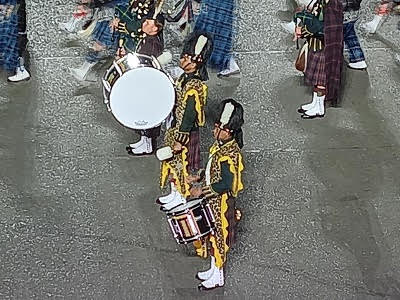
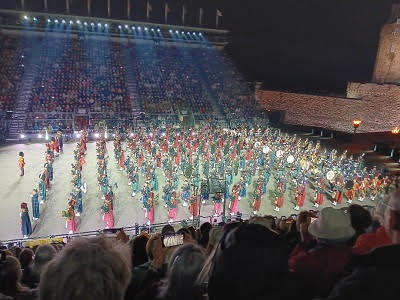
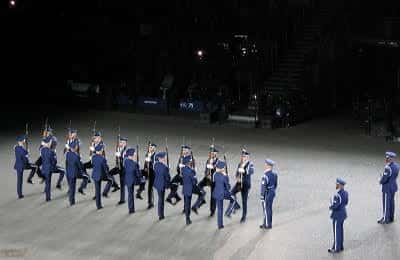
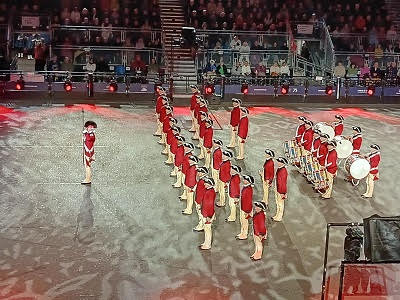
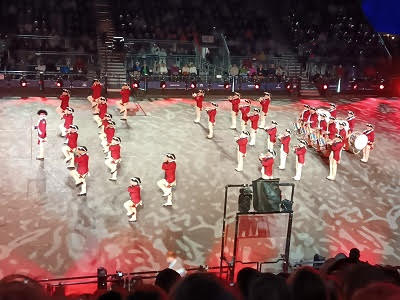
The Esplanade is the location, in the month of August every year, for the Royal Edinburgh Military Tattoo. The word tattoo originates from a 17th century Dutch military command, to “turn off the tap”, signaling soldiers to return to their barracks for the night. The Royal Edinburgh Military Tattoo is 75 years old and features world class military musicians, dancers and precision drill teams. It celebrates British military, Scottish heritage and international culture using lighting projects, sound technology and backdrops shown on the walls of Edinburgh Castle. The musical selections range from traditional songs from various countries to traditional marching songs to pop songs and everything in-between. This years performing groups included the Band of the Polish Border Guard, the Top Secret Drum Corps from Switzerland, U.S. Air Force Honor Guard, U.S. Old Guard Fife and Drum Corps, the Ukraine Naval Forces Orchestra, Pipes and Drums of the 1st Battalion Scots Guard and Irish Guards, the Band of the Royal Regiment of Scotland, Pipes and Drums of the Royal Gurkha Rifles, Countess of Wessex Strings and several other British Army bands. This is my third time seeing the Tattoo and each time the 90-minute performance is amazing, with most of the groups different every year. The U.S. Air Force Honor guard performed a silent drill routine that had the crowd Oohing and Awing at what they were seeing. A wonderful drone performance was at the end of the show over Edinburgh Castle. The sold-out audience of 8,800 takes a while to exit the Esplanade and our group had a bit of an adventure trying to find our parked bus after we finally got out of the stands and headed to what is referred to as Lawnmarket, the former marketplace of long ago.
Finally finding our bus, a quick ride on the motorway from Edinburgh back to the hotel in Glasgow for a slightly late end to a very fun day and a reminder that Day 4 would be an earlier departure for Stirling Castle, the Wallace Monument and a whiskey tasting at the Glengoyne Distillery.