
by Samantha Melder
For many people living with acquired aphasia following a stroke or brain injury, one of the greatest challenges isn’t just navigating the communication difficulties that come with the condition. It’s losing the confidence to participate in everyday life. Simple activities like ordering a meal, joining a conversation or attending a social gathering can become overwhelming, leading many to withdraw from the communities around them.
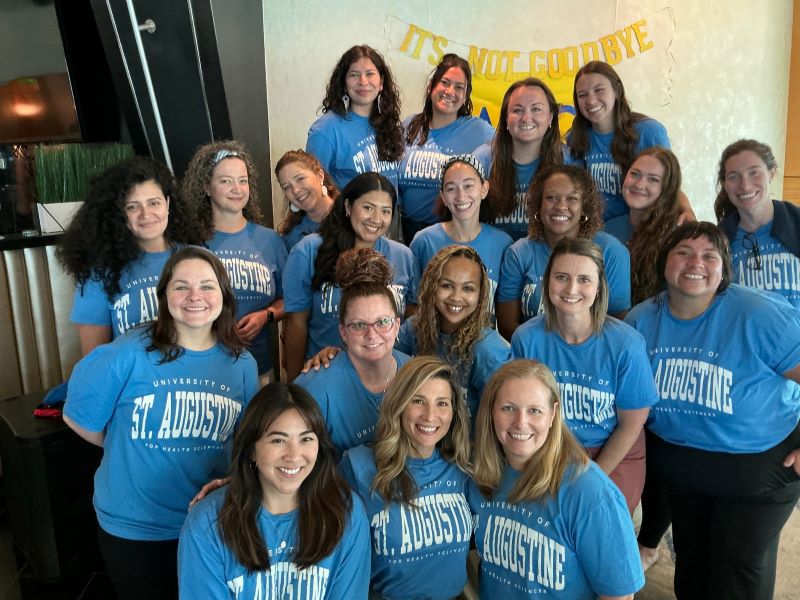
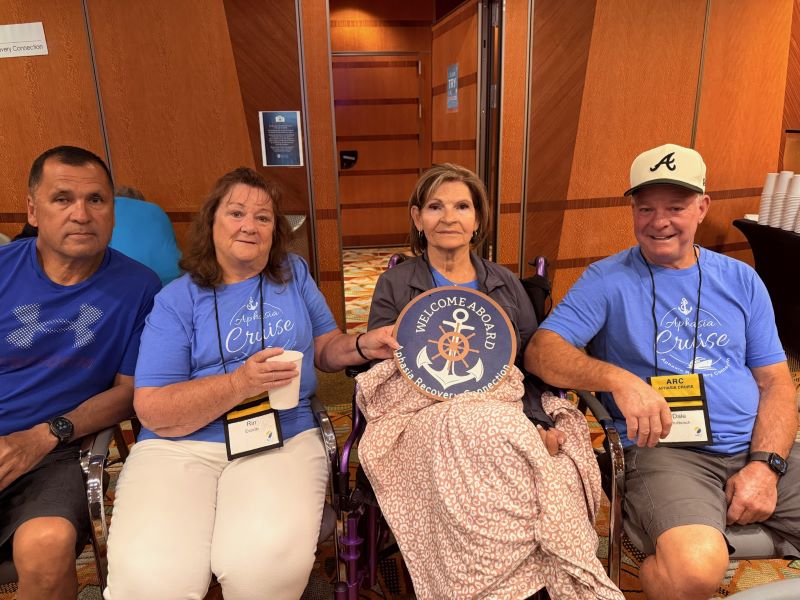
The University of St. Augustine for Health Sciences (USAHS), in partnership with Aphasia Recovery Connection, is helping change that through the Aphasia Conference at Sea, an immersive learning experience that brings together people living with acquired aphasia, their care partners and graduate students in the university’s Master of Science in Speech-Language Pathology program. This spring, 17 students and four faculty members participated in the week-long conference, where future clinicians learned alongside participants in an environment centered on communication, connection and community.
“Students come away from this week with such a deep understanding of not only aphasia itself, but the way it impacts a person’s day-to-day life and the rest of their family,” said Amanda Eaton, Associate Professor in the Master of Science in Speech-Language Pathology program at USAHS. “There’s so much implicit learning they experience over the course of the week. It changes them as clinicians.”
Why Awareness Matters
Despite being one of the most common consequences of stroke, acquired aphasia remains one of the least understood. Many people have never heard the term, making everyday interactions even more challenging for those living with the condition.
Acquired aphasia is a communication disorder most often caused by a stroke. It can affect a person’s ability to speak, understand language, read and write, but it does not affect intelligence. Because no two people experience aphasia the same way, some communicate fluently but struggle to find the right words. Others may have difficulty understanding conversations or expressing even a single word.
“Imagine if you couldn’t send a text, join a Zoom meeting, tell your children you love them or read them a story,
“said Carol Dow-Richards, Executive Director of Aphasia Recovery Connection. “That’s the reality many people with aphasia face every day.”
Because communication challenges often extend far beyond healthcare settings, awareness plays a critical role in helping people remain active in their communities. Simple changes, such as allowing extra time for someone to respond or recognizing that communication looks different for every individual, can make everyday interactions more accessible.
Recovery involves more than rebuilding communication skills. It also means rebuilding confidence, connection and participation in everyday life. When people understand aphasia, they are better equipped to support those living with it, helping create communities where more people feel seen, respected and included.
More than a Conference
Unlike a traditional clinical experience, the Aphasia Conference at Sea allows USAHS students to learn alongside people living with acquired aphasia as they navigate everyday life.
Before boarding, students spend the academic term preparing communication-focused activities that encourage conversation, participation and connection. During the conference, they tailor those activities to each participant’s communication strengths and needs, whether that means writing keywords on a whiteboard, using an augmentative communication device or providing the extra time and support someone needs to express themselves. They also lead small-group discussions, facilitate partner activities and support communication during shared meals and social events, giving participants opportunities to practice communication in meaningful, real-world settings.
Learning extends well beyond scheduled sessions. Students support participants as they order meals, join conversations, attend comedy shows, participate in yoga and water aerobics classes, navigate excursions and take part in social activities that many had avoided since their stroke. By offering communication support in real-world settings, students help participants return to meaningful activities while building the confidence to participate more fully in everyday life.
“We’re working on things that are actually going to improve their life and help them learn to live well with aphasia,
” Eaton said. “It’s those really functional experiences that help students reframe what meaningful goals look like.”
Whether encouraging someone to sing karaoke for the first time since their stroke or helping a participant order a meal independently, students see firsthand how thoughtful communication support helps people reconnect with everyday life.
Rebuilding Confidence through Connection
The impact of the Aphasia Conference at Sea becomes clear in the stories participants share.
One of the moments that stood out most to Carol involved a participant named Martin. He arrived at the conference unsure whether he wanted to be there. After listening to others share experiences similar to his own, he realized he had found a community that understood the challenges of living with acquired aphasia. By the end of the week, he had formed new friendships, embraced new experiences and rediscovered the confidence to travel again after years of stepping away from activities he once enjoyed.
Similar moments unfolded throughout the conference. One participant joined a water aerobics class for the first time since her stroke. Another rode a waterslide with students encouraging her and helping her communicate with cruise staff. Others sang karaoke, returned to favorite hobbies and enjoyed conversations with people who understood their experiences.
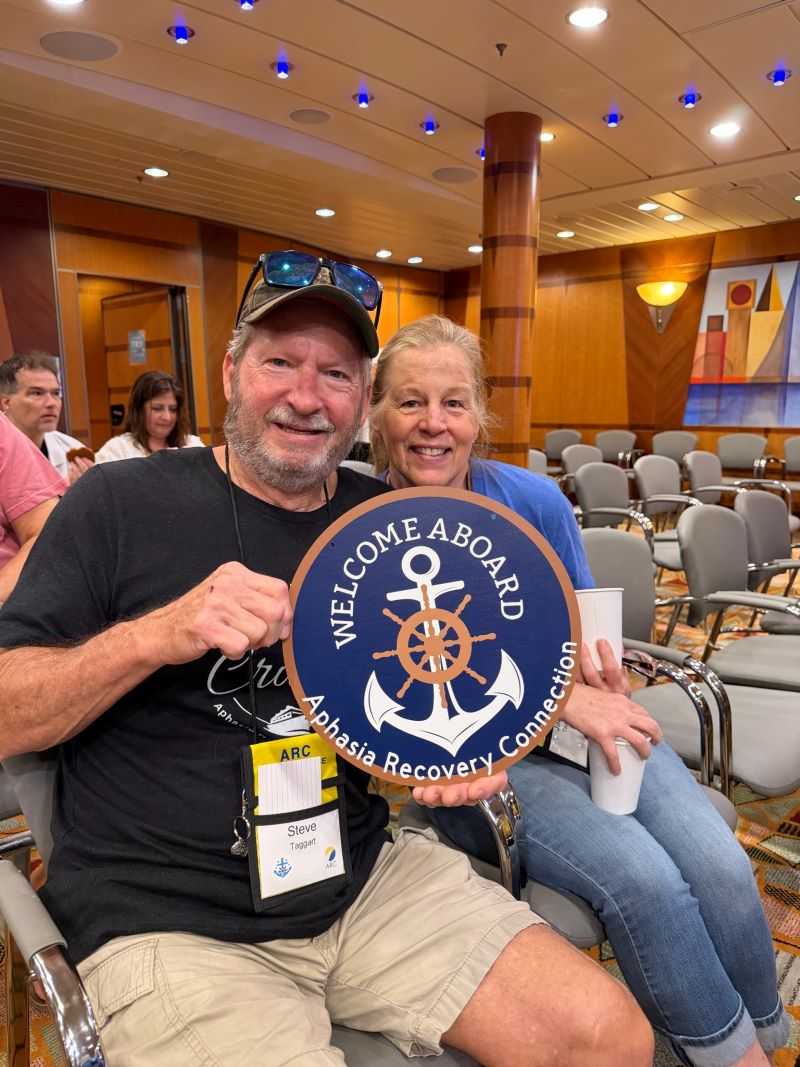
The conference offers something many people living with acquired aphasia rarely find: a communication-friendly community where people slow down, listen patiently and understand the challenges of living with aphasia without rushing conversations or finishing sentences. Participants leave with more than memories of a week at sea. They leave with renewed friendships, stronger support networks and the reassurance that they are not alone.
Preparing Future Clinicians
The Aphasia Conference at Sea teaches lessons that extend far beyond communication strategies.
By spending an entire week alongside participants and their care partners, USAHS students learn from the people who know aphasia best: those living with it every day. Their lived experiences teach lessons no textbook or traditional clinical placement can fully replicate. Students gain a deeper understanding of how acquired aphasia shapes everyday life and learn that effective care begins with listening, adapting and seeing the whole person rather than focusing only on a diagnosis.
“They were eager to learn, but they also allowed people with aphasia to be the teachers,” said Dow-Richards. “They gave them space and time to share their stories, and by doing that, the students developed a much better understanding of what it’s really like to live with aphasia.”
Eaton credits the diverse life experiences of USAHS students with helping shape the conference experience. Rather than simply observing, they stepped into leadership roles, built meaningful relationships with participants and created an environment where people living with acquired aphasia felt seen, heard and supported. In doing so, they gained the empathy, adaptability and perspective needed to become more thoughtful, compassionate clinicians.
“Before the conference, I understood aphasia from a clinical perspective. Spending a week alongside people living with acquired aphasia and their families changed that completely. I saw how communication challenges affect everyday moments that many of us take for granted. More importantly, I learned that some of the most meaningful support comes from listening, being patient and meeting people where they are. That experience has changed the way I’ll care for future clients throughout my career” said Sade Miller, USAHS SLP student
Building a More Connected Future
The impact of the Aphasia Conference at Sea extends well beyond a single week. Participants leave with new friendships, stronger support networks and a renewed sense of possibility. USAHS students leave with a deeper understanding of what compassionate, person-centered care truly looks like and carry those lessons into their future careers.
Together, those experiences create something much larger than a conference: They help build more communication-friendly communities where people living with acquired aphasia feel understood, respected and included.
By preparing future speech-language pathologists through immersive experiences rooted in empathy, connection and community, USAHS is helping shape a future where more people living with acquired aphasia can participate fully in everyday life.
Submitted by Samantha Melder – Public Relations Associate Communications Strategy Group
Anecdotes by Carol Dow Richards – Executive Director of Aphasia Recovery Connection’ Amanda Eaton – Associate Professor in the Master of Science – Language Pathology Program at USAHS, and Sade Miller Student Participant