
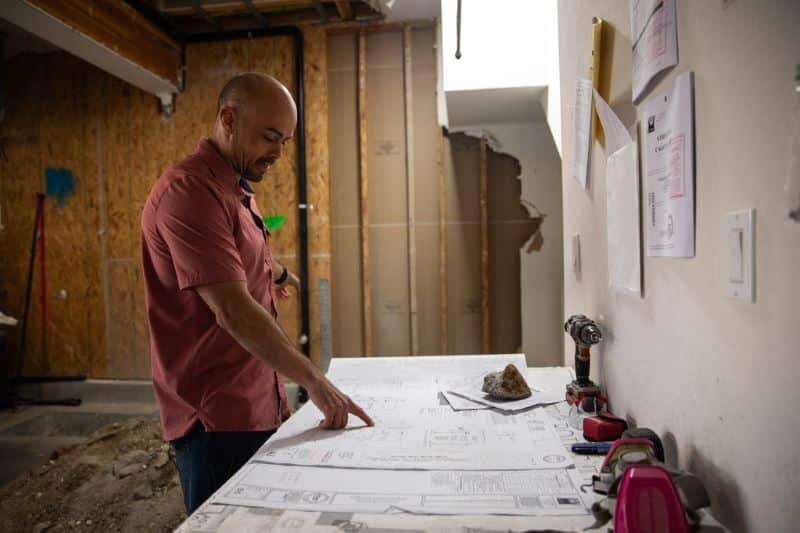
In a dispute over whether he can convert his three-story condominium’s garage into its own ground-floor apartment, one Carlsbad resident is waging a battle against his homeowners association.
As CalMatters’ Ben Christopher explains, Adam Hardesty is an unemployed project manager and HOA board vice president. After months of research and planning, he decided to turn the 373-square-feet garage of his condo into a standalone accessory dwelling unit, or ADU. Hardesty plans to outfit the ADU with a kitchenette, bedroom and bathroom and rent it out as a source of passive income.
But the Mystic Point Homeowners Association that Hardesty belongs to wants to quash those plans — kicking off a legal dispute that raises the question: Who has the final say about what gets built where?
Amid a severe housing crunch, California lawmakers for the past decade have passed legislation to encourage more housing, with state officials at times suing cities that don’t comply. Several ADU-related laws have also chipped away local authorities’ ability to reject housing. For Hardesty, he cites a 2019 law that voids any homeowners association’s rule that “prohibits or unreasonably restricts” the construction of ADUs.
But the law applies to parcels of land that are “zoned for single-family residential use,” and Hardesty lives in a condominium multi-plex. According to Hardesty’s former attorney, the homeowners association’s lawyer argued that because Hardesty’s parcel is not “zoned for single-family residential use,” the law doesn’t apply.
Hardesty’s situation underscores the fuzzy role homeowners associations play in state policy: Though they’re usually classified as nonprofits, their role is similar to a town’s planning-and-building department, and at times serve as the last bastion for local control.
So what happens if a resident butts heads with their homeowners associations over a state law? They’ll have to duke it out in court, since the California Department of Housing and Community Development does not “have the ability to take enforcement actions directed at HOAs,” said one department spokesperson.