
Stirling Castle-Wallace Monument-Glengoyne Distillery- Music at Machair Pub-Kelvingrove Art Galleries & Museum-Glasgow City Mural Tour-Scotia Pub
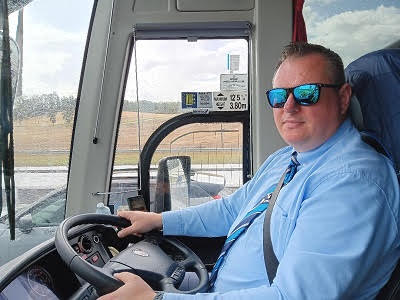
After having sun for the first couple of days in Glasgow, our 4th day of the Scotland adventure found more traditional Scottish weather people assume is normal for Scotland. After morning breakfast, we loaded onto our coach to meet the driver that would be with us for the rest of the tour, Marcin from Poland. Marcin, has been in Scotland for a while with his family, spoke with a bit of a Scottish accent and had a great personality. The weather for today was overcast and as we exited Glasgow for our first location, we had a bit of misty rain. This didn’t last too long and by the time we reached Stirling Castle it had stopped.
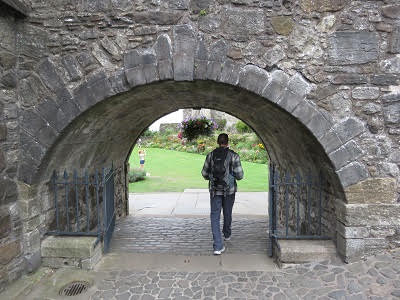
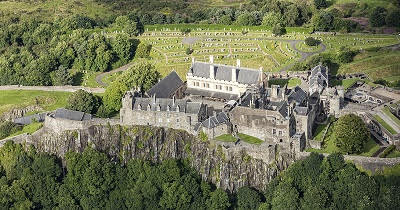
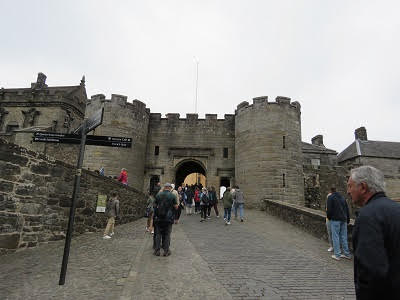
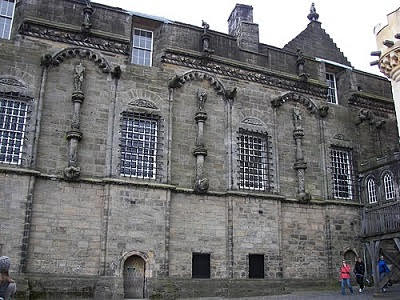
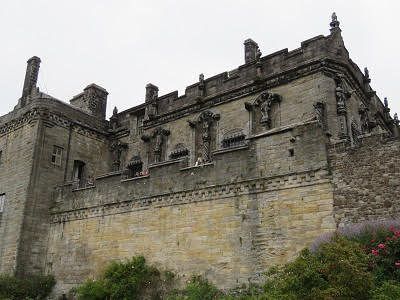
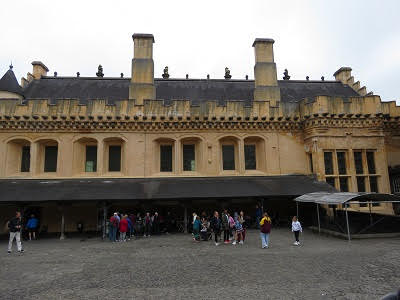
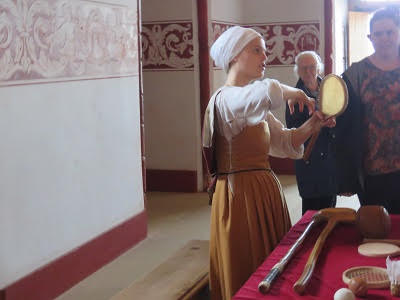
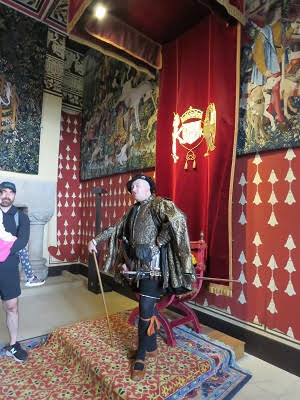
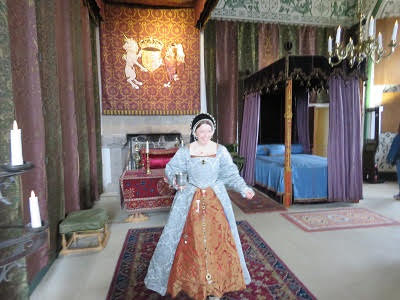
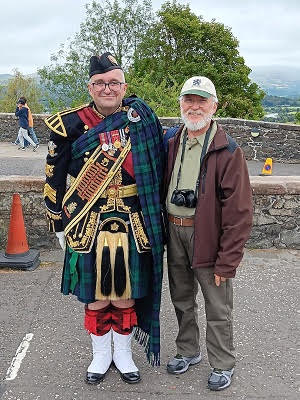
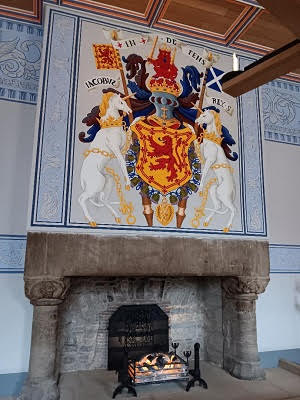
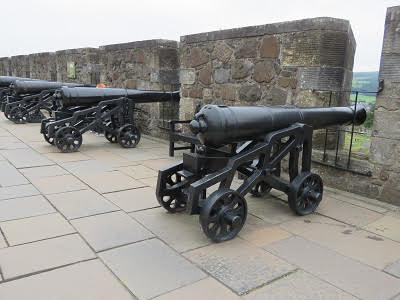
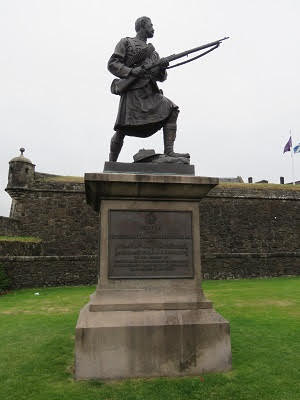
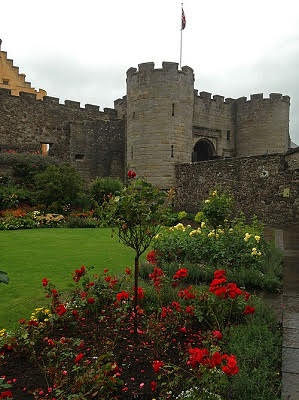
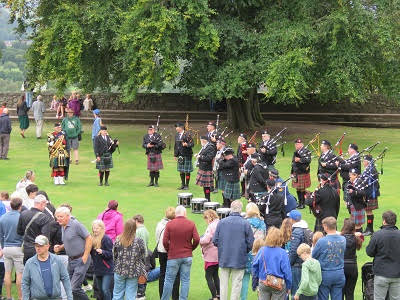
Stirling Castle is one of the largest castles in Scotland and sits atop a geologic formation called a craig, referred to as Castle Hill, and is surrounded on 3 sides by steep cliffs. Most of the principal buildings date back to the 15th and 16th centuries, and some remain from the 14th century. Several Scottish Kings and Queens were crowned at Stirling Castle, including Mary, Queen of Scots in 1542. There were several sieges of Stirling Castle during the Wars of Scottish Independence, including an unsuccessful attack by the forces of Bonnie Prince Charlie. As the role of Stirling Castle as a royal residence declined, the castle became primarily a military center, much as Edinburgh Castle did. Today, Stirling is a stop on most tourist visits to Scotland and is used as a concert venue, the site of the Stirling City Hogmanay celebration and the home of the Regimental Museum and Headquarters of the Argyll and Sutherland Highlanders. Hogmanay is the Scottish celebration of the last day of the old year. Bob Dylan and Rod Stewart have performed concerts in Stirling Castle. The castle even has its own ghost, as most castles in Scotland, England, Wales and Ireland have. For Stirling, she’s called the Green Lady. We spent several hours at Stirling, wandering through the rooms, visiting the museum and the grounds, and of course, either getting a bite to eat or stopping by the gift shop. In several of the rooms in the castle, individuals in period costumes told stories about the rooms and the castle. A local bagpipe group, in full regalia, was playing in the Rose Garden.
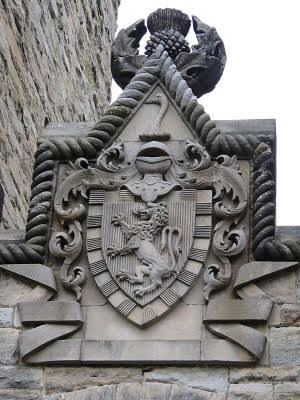
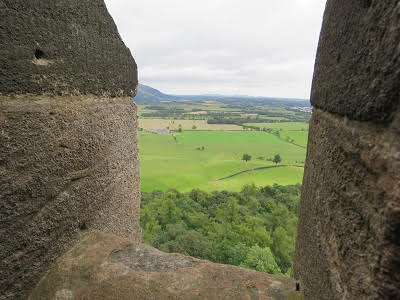
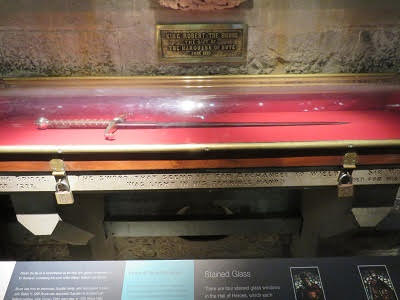
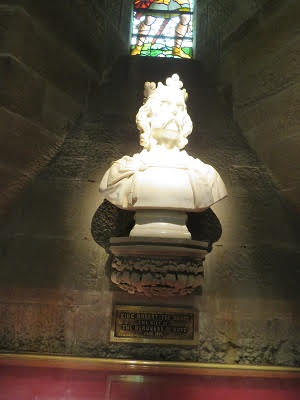
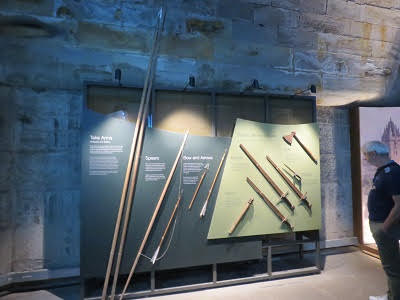
Boarding the bus, our next stop was the Wallace Monument, not far from Stirling Castle. This 220-foot tower on the Abbey Craig commemorates Sir William Wallace, a 13/14th century Scottish hero. As the Guardian of Scotland, his troops defeated the English at the Battle of Stirling Bridge in 1297. He was later defeated at the Battle of Falkirk and relinquished his title to Robert the Bruce. Wallace was captured in Robroyston, near Glasgow, in 1305. King Edward I of England had him hung, drawn and quartered and beheaded for high treason. The popular film “Braveheart” starring Mel Gibson depicted his life, but most Scottish folk don’t like the film because it has a number of historical inaccuracies. The Foundation Stone for the monument was laid by the Duke of Athol in 1861. The spot for the monument was said to be the location where Wallace watched the gathering of the Army of King Edward I of England just before the Battle of Stirling Bridge. You can see Stirling Bridge in the distance from the top of the tower. The Sandstone tower took 8 years to build and was completed in 1869. There are 246 steps in the spiral staircase that winds to 4 levels. In the Hall of Arms room, the Wallace 5’4” long sword is shown in a case. On another level, called the Hall of Heroes, busts of numerous Scottish heroes hang on the wall. Scottish personalities like Robert the Bruce, Robert Burns, John Knox, Sir Walter Scott, David Livingston and many more circle the walls of the room. The next room is The Royal Chamber, and the top is called The Crown Spire. A Victorian statue of Wallace is on the corner of the monument. There was once a statue of Mel Gibson as Wallace from the movie located in the parking lot. Criticism and vandalism led to the statue being returned to the sculptor. I am proud to say that I made it up the 246 stairs to the top, with son Brian, to see the great views all around the area. Beautiful homes and estates could be seen as well as the old Stirling Bridge, still used today.
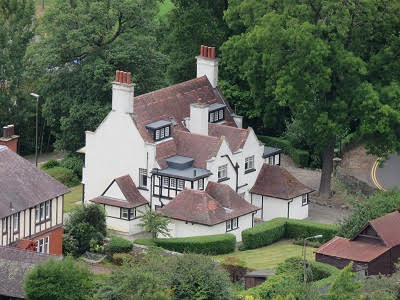
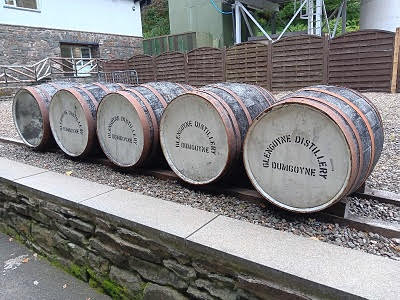
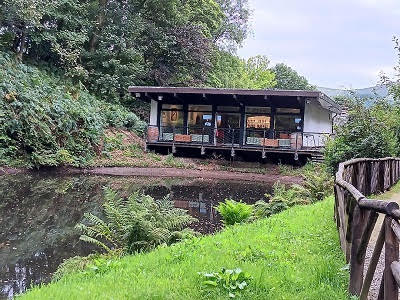
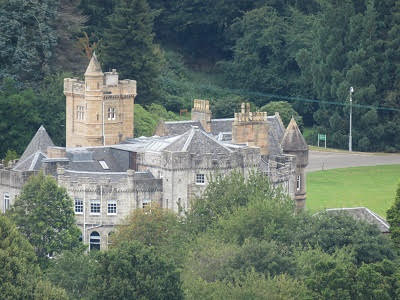
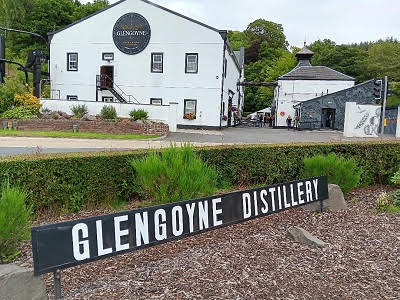
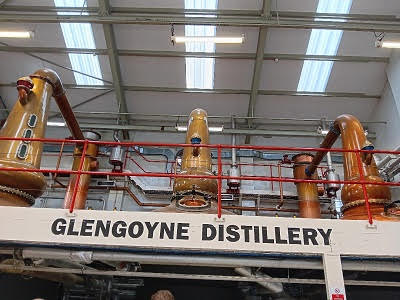
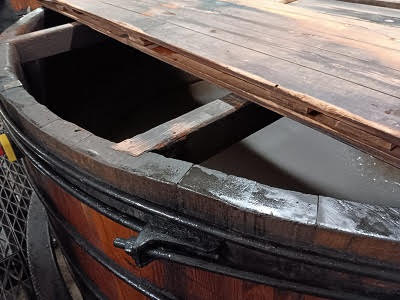
Returning to the coach, our group was ready for the next part of this day’s Scottish sites, a visit to the Glengoyne Distillery. This distillery has been called, in some publications, the most beautiful distillery in the Highlands. The distillery literally sits on the division line between the Highlands and the Lowlands of Scotland. The distillery is in the Highlands, and the maturing casks are stored across the street in the lowlands. Glengoyne is 14 miles north of Glasgow and near Loch Lomond, a place we will visit on Day 6. The name of the distillery means the Glen of the Geese. Goyne means geese in Galic. The founding date for the distillery goes back to 1833. We were told that one of the standout features of their whiskeys is that they are distilled more slowly than any other malt whiskey on the market. Our group was divided into two groups of 10 and were taken on an amazingly detailed tour of the whole distilling process. I have been on several distillery tours, and one thing is clear to me. You almost have to be a chemistry major to understand the complex process of taking the water they use and adding everything you need along with the process and machinery needed to eventually produce the great product we tasted. We were shown whiskeys that had matured for 30, 25, 21, 18, 15, 12 and 10 years. Our guide also gave us a detailed lesson in how to taste and enjoy the whiskeys. We were also shown the different casks used for maturing some of the whiskeys, from bourbon casks to sherry casks. Glengoyne also had a 16-year-old whiskey matured in Mizuhara Oak from Japan. A range of prices were available in the gift shop, and they would ship as well. I discovered that Glengoyne whiskeys can be found in Total Wine stores. One of the Glengoyne whiskeys they had on display was priced at $999.95.
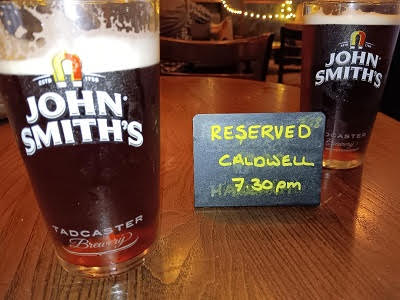
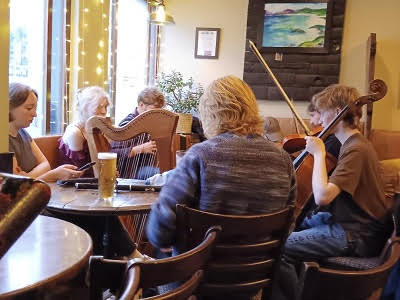
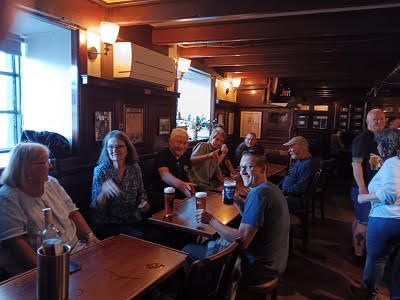
Back on the bus, a leisurely drive back to our hotel where we had a chance to grab a bite to eat and later in the evening jump back on the bus for a trip to Machair Bar to listen to a group of friends who joined together to play a variety of Scottish songs. The group of 6 or 7 played different instruments, including a harp. Our guide Brian had reserved a few tables for those in our group who chose to attend. We stayed for a couple of hours, then in groups of 5 took cabs back to the hotel. The end of a great day in Scotland.
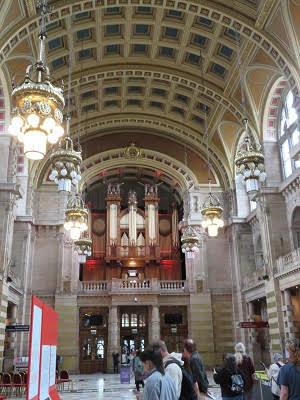
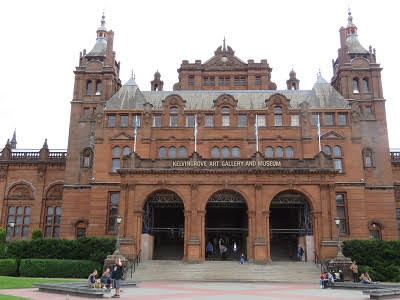
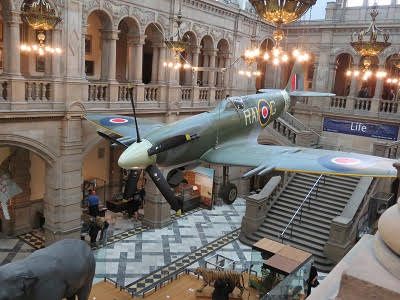
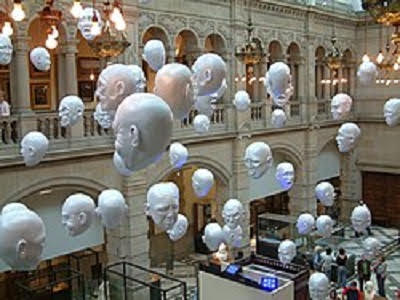
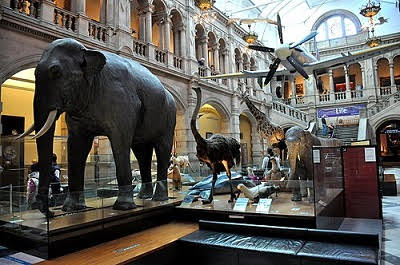
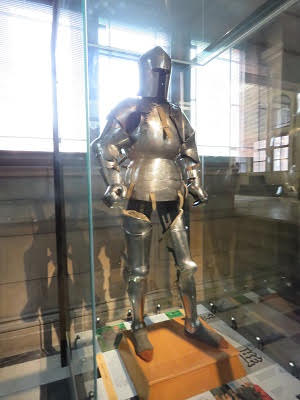
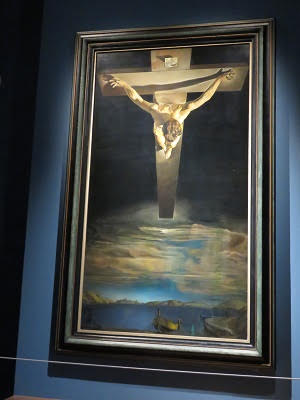
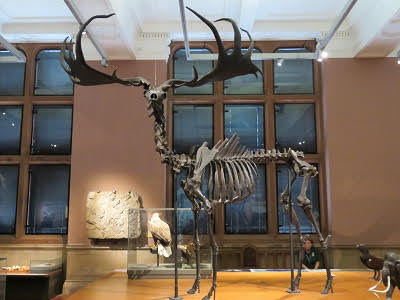
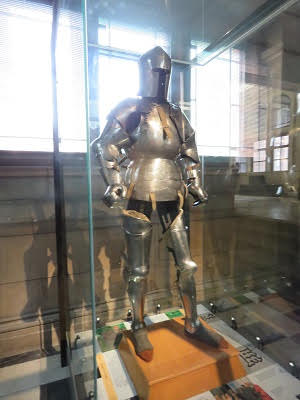
The next morning began as usual with a wide choice of breakfast selections before a mid-morning bus ride to take in the Kelvingrove Art Galleries and Museum in Glasgow. The Kelvingrove opened in 1901, but the museum was previously at the Kelvingrove mansion not far from its present location. It housed what was called the City Industrial Museum. The Kelvingrove was initially the Natural History Museum. The Art Galleries and Museum today consists of 22 galleries and 8,000 objects. On display are natural history exhibits, Egyptian antiquities including a massive sarcophagus, medieval arms and armory, Scottish history, art collections and much more. The Kelvingrove just went through a 3-year $36 million dollar renovation. Some of the stand-out exhibits are Sir Roger the Asian elephant, Avant armor (the oldest near complete suit of armor dating back to 1440), a 1940 LA198 Royal Air Force Spitfire hanging from the ceiling, a Claude Monet painting, the Floating Heads exhibit hanging in the East Court and Salvador Dali’s 1952 “Christ of St. John of the Cross” (located in its own special exhibit room). We spent about two hours in the Kelvingrove before boarding the bus to return to the hotel.
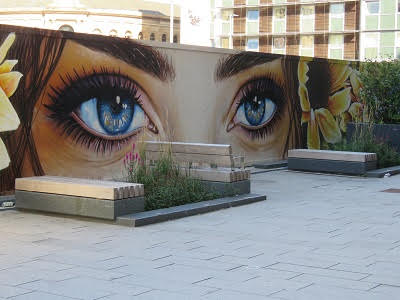
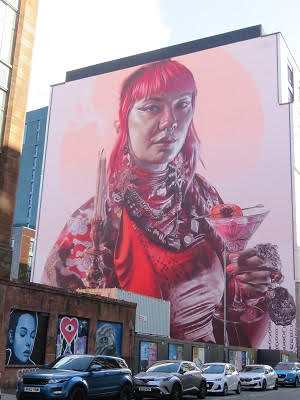
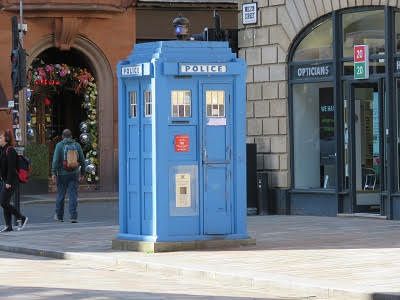
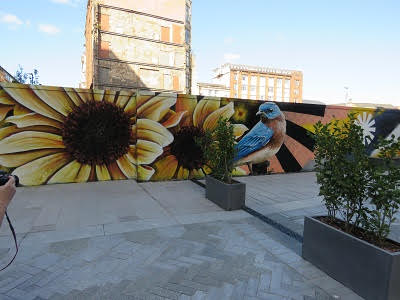
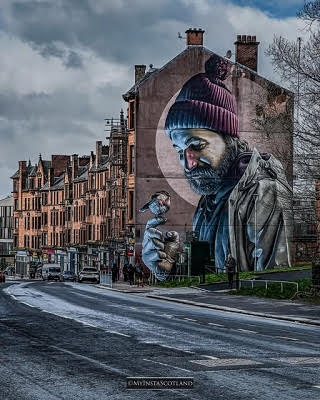
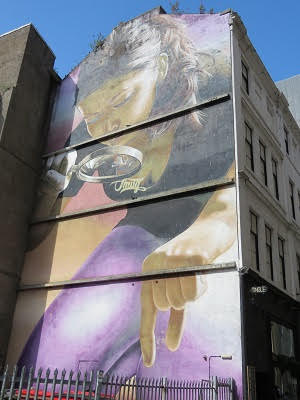
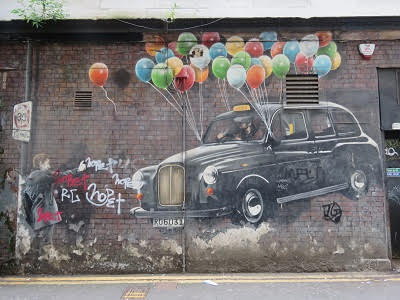
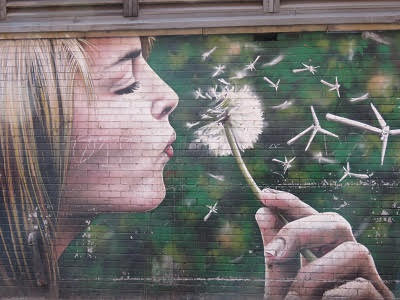
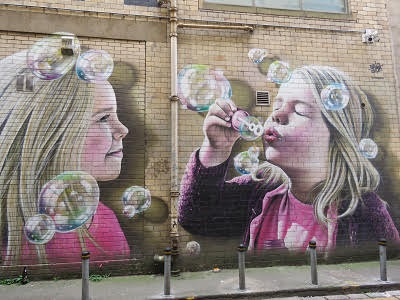
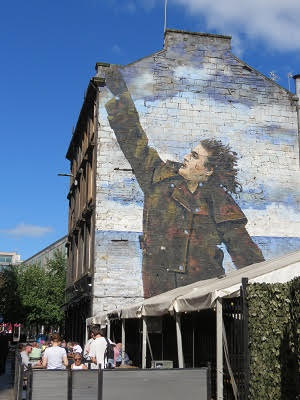
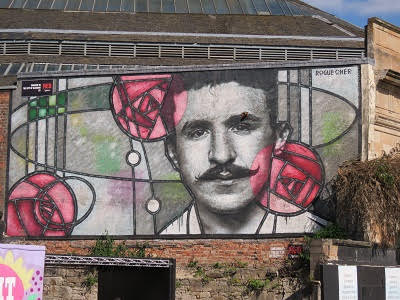
We had grabbed a quick lunch in the Kelvingrove before boarding the bus and returning to Vovo Grand Central Hotel. Brian explained on the bus ride back that those of us that wanted to take part in a Walking tour of some of Glasgow’s City Murals would meet him and our guide, Tommy, just outside of the hotel. There is a total of 31 large murals in Glasgow that are on the official Glasgow Mural Trail. Twenty of these are around the Centre City area. It would take about 2 ½ hours of non-stop walking to see all 20. The most famous of the murals is called the St. Mungo mural on High Street, completed by Australian street artist Smug (Sam Bates). Smug also painted “Honey I Shrunk the Kids” and the “World’s Most Economical Taxi”, two murals we saw on our tour. There are also three murals in tribute to Scottish comedian Billy Connelly. Many of the murals are completed by unknown artists and many by very well-known artists. We saw one section of walls running by the Clyde River where street artists paint over existing murals to create new designs. We saw around ten murals on our walking tour.
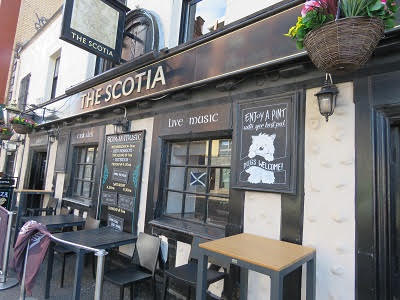
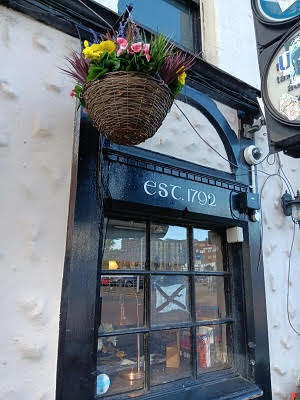
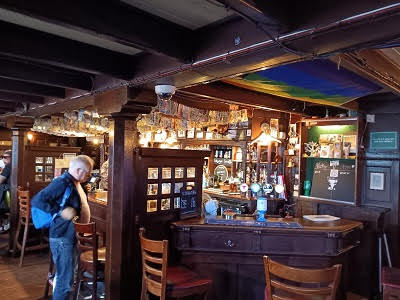
After the tour, our group leader, Brian, took us to the oldest pub in Glasgow, The Scotia, first established in 1792, where we enjoyed drinks before wandering back to the Voco Grand Central and our evening meal back in the Tempus Restaurant.
We would be leaving Glasgow the next day heading for Day 6 to Loch Lomand, Inveraray Castle and the city of Oban, staying there for several days.