


By Fernanda Lopez Halvorson, County of San Diego Communications Office
Jun. 2, 2026 | 4:54 PM
Reading Time: 3 minutes
People living in the South Bay, especially those near the Tijuana River Valley (TJRV), are experiencing high hydrogen sulfide (H2S) emissions, often recognized by the strong rotten egg smell produced by untreated wastewater flows.
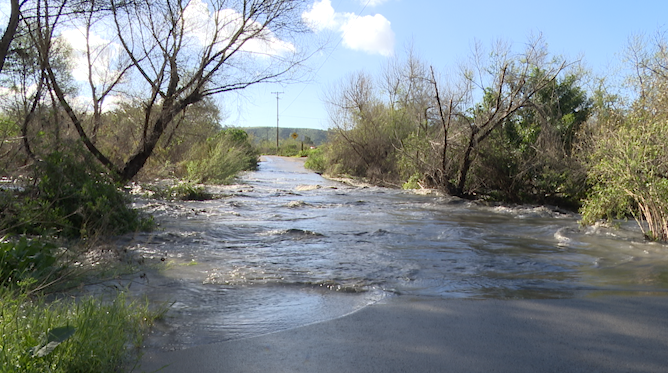
The rise in H2S emissions comes after a recent break in a sewage pipe in Tijuana called the Parallel Gravity Line.
The San Diego County Air Pollution Control District (SDAPCD) monitors report that average hydrogen sulfide emissions in the Tijuana River Valley exceeded the 4-hr Level 1 Federal Acute Exposure Guideline Level (AEGL) threshold of 360 ppb for a period between 10 p.m. and 4 a.m. earlier today and reached a one-hour average of 915 parts per billion between 1 and 2 a.m. Current and recent hourly H2S emissions are available online through the SDAPCD’s network of monitors.
The U.S. International Boundary and Water Commission (USIBWC) first reported the break over the weekend and has continued to provide updates.
The agency says repairs are being expedited, and USIBWC is pressing Mexico to complete them as quickly as possible. While Mexican authorities have indicated repairs could be completed as soon as the end of the week, USIBWC continues to urge an accelerated timeline to halt excess flows to the Tijuana River.
The flows are expected to cause an increase in stronger odors in the area.
The Parallel Gravity Line is currently being rehabilitated end-to-end under a binational agreement, part of the U.S.-Mexico commitment to a permanent solution to transboundary flows.
Visit the USIBWC official X site for the latest updates on the repairs.
“We are working closely with our partners at the USIBWC, SDAPCD and others and staying in close communication,” said Dr. Sayone Thihalolipavan, M.D., M.P.H., County Public Health Officer. “We really want to people who live, work or go to school in the area to know where they can find up-to-date information on H2S levels and what steps they can take to reduce their exposure to H2S.”
According to the U.S. Environmental Protection Agency, emissions exceeding the AEGL Level 1 can cause “notable discomfort, irritation, or certain asymptomatic non-sensory effects. However, the effects are not disabling and are transient and reversible upon cessation of exposure.”
“We are continuously monitoring hydrogen sulfide levels in the Tijuana River Valley to ensure residents are informed and safe, said Paula Forbis, Air Pollution Control Officer for the San Diego County Air Pollution Control District. “We encourage residents to visit our website for the latest information on hydrogen sulfide levels. Our monitoring network provides current data…