

GrassrootsHealth and the Helen Knoll Foundation are spotlighting research on sunlight, vitamin D, and breast cancer prevention during Breast Cancer Awareness Month and honoring pioneering scientists at the inaugural Baggerly-Garland Awards on World Vitamin D Day.
Encinitas, CA, October 1, 2026
As Breast Cancer Awareness Month begins, the Helen Knoll Foundation and GrassrootsHealth are bringing a question to the forefront of women’s health: What role might sunlight and vitamin D play in breast cancer risk, and what does the evidence tell us today?
Research from UC San Diego and more than 200 other studies has examined the association between higher vitamin D blood levels and lower breast cancer risk. Researchers have also studied vitamin D levels in relation to premenopausal breast cancer. The two nonprofits want more people to know about this work and join the conversation.
Much of that research began with sunlight. In 1980, UC San Diego epidemiologists Cedric and Frank Garland noted that colon cancer rates were higher in regions that receive less sunlight. They proposed that lower exposure to ultraviolet B (UVB) light, the specific band of sunlight that initiates vitamin D production in the body, might explain the difference. Later studies extended this work to breast cancer. A 2008 analysis of 107 countries published in The Breast Journal, co-authored by two of this year’s honorees, found that lower UVB levels were associated with higher breast cancer incidence.
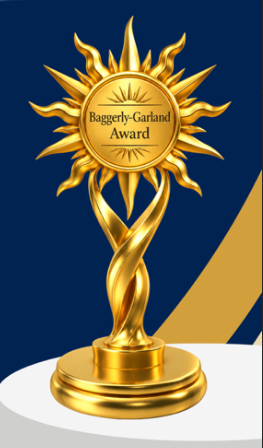
On World Vitamin D Day, GrassrootsHealth will present the inaugural Baggerly-Garland Awards to three scientists whose pioneering work has advanced the understanding of vitamin D, UVB exposure, and cancer risk: William B. Grant, PhD; Joan M. Lappe, PhD, RN; and Edward D. Gorham, MPH, PhD.
The awards are named for GrassrootsHealth founder Carole Baggerly and Drs. Frank and Cedric Garland, whose research at UC San Diego helped establish the link between sunlight, vitamin D and cancer risk.
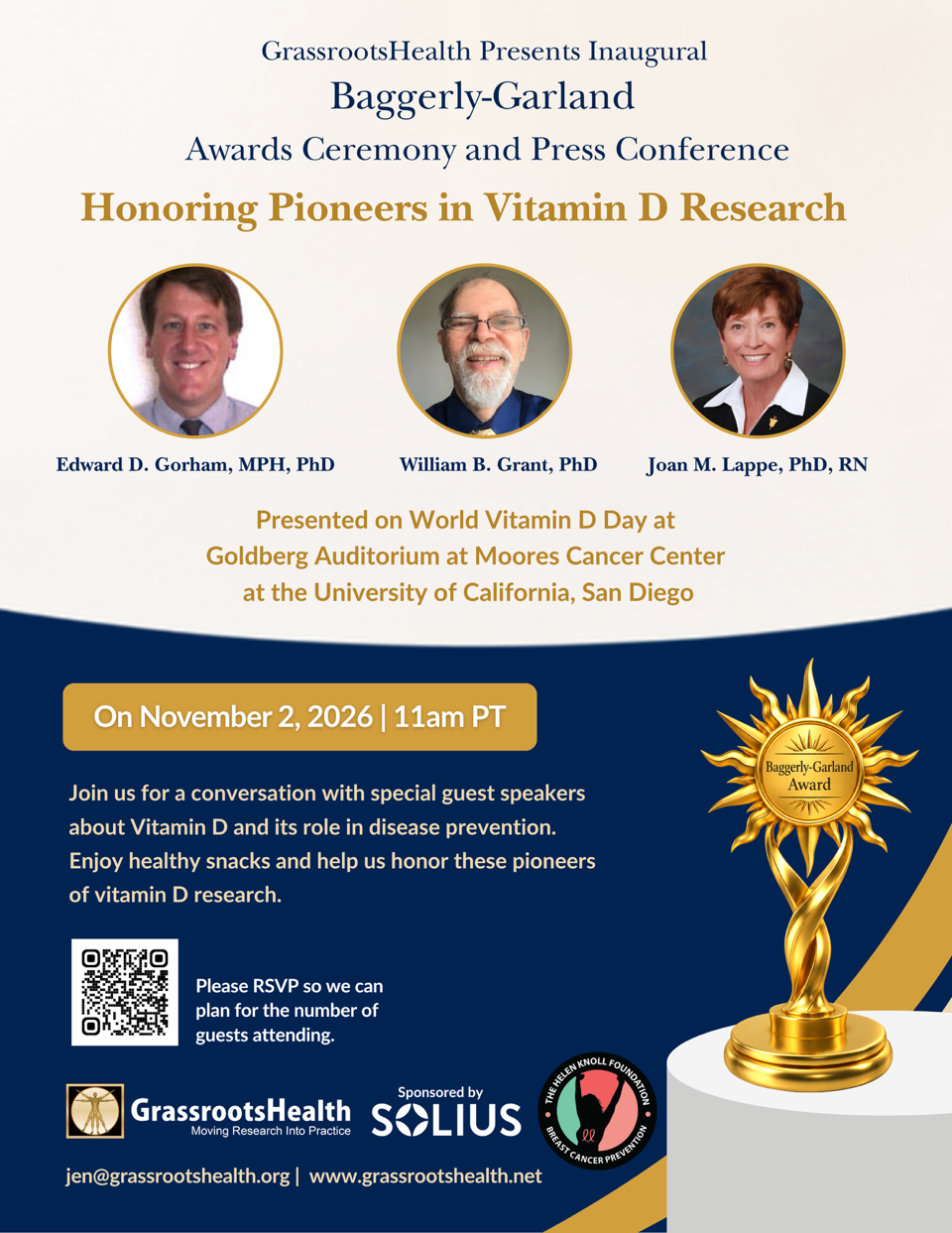
The public and press are invited to the awards ceremony and press conference on November 2, 2026, at 11 a.m. PT at Goldberg Auditorium, Moores Cancer Center, University of California San Diego. The awards are sponsored by Solius Labs and presented in partnership with the Helen Knoll Foundation.
The Helen Knoll Foundation will also present a Vitamin D Visionary Award to Carole Baggerly, founder of GrassrootsHealth, honoring her work to bring vitamin D research to public attention and translate scientific findings into public health action.
“We are inspired by breast cancer survivor Carole Baggerly’s extraordinary commitment to bringing vitamin D research to public attention,” said David Knoll, Co-Founder, Helen Knoll Foundation. “After her own experience with cancer, she dedicated herself to helping people understand the science and ask better questions about their health.”
“Our bodies were designed to make vitamin D from sunlight, specifically the sun’s UVB light,” said Chris Kiple, CEO of Solius. “Dr. Garland and this year’s honorees helped show how closely UVB exposure is tied to our health, and we are proud to help recognize their work.”
The Helen Knoll Foundation is committed to helping women put research into action—starting with Knowing Your Vitamin D Number. They promote vitamin D testing, education and supplementation as an important step in helping prevent breast cancer. This should include providing vitamin D at low cost to everyone, encouraging universal testing of the 25-hydroxyvitamin D level in the blood, and supplementing with personalized doses to reach a target serum level of 40 to 60 ng/mL.
“Our studies confirmed our belief that vitamin D is an excellent prevention strategy since it is low-cost, easy to take and safe,”
said Dr. Joan Lappe, a pioneer in vitamin D research and cancer. “However, since there is considerable variability in vitamin D requirements among individuals, the optimal levels of supplementation can only be determined by knowing your serum 25(OH)D.”
The Institute of Medicine in 2011 indicated an intake of 10,000 IU/day as the NOAEL (no observed adverse effect level); meanwhile, research has shown no toxicity from vitamin D below a serum 25(OH)D level of 150 ng/mL.
Vitamin D can come from controlled UVB light exposure, diet, and supplementation. Vitamin D serum level testing can be obtained through most healthcare providers or via online home blood spot testing, such as those provided by GrassrootsHealth at checkyourd.org. Checking to ensure a result between 40 to 60 ng/mL is essential; if low, using the vitamin D dosing calculator can help estimate a personalized dose needed to achieve target levels.
GrassrootsHealth is a 501(c)(3) nonprofit public health organization focused on solving the vitamin D deficiency epidemic through research, education and advocacy. Working with more than 50 international vitamin D scientists and experts, the organization translates published research into practice and public health action. For more information visit grassrootshealth.net.
The Helen Knoll Foundation, a 501(c)(3) nonprofit, is dedicated to preventing breast cancer by empowering young women with essential knowledge about risk factors, providing advocacy, and offering access to age-appropriate screenings. With a mission to save lives through education and awareness, the Foundation is committed to ensuring that every woman has the tools to take charge of her health. For more information visit helenknollfoundation.org.
Solius Labs is the world’s first Personalized Sunlight company, developing FDA-cleared, medical-grade UVB light therapy technologies that safely replicate the systemic biological benefits of sunlight year-round. By combining a targeted healthy UVB spectrum, personalized dosing, and clinical validation, Solius is redefining how UVB light is used to support human health. For more information, visit Solius.com.