

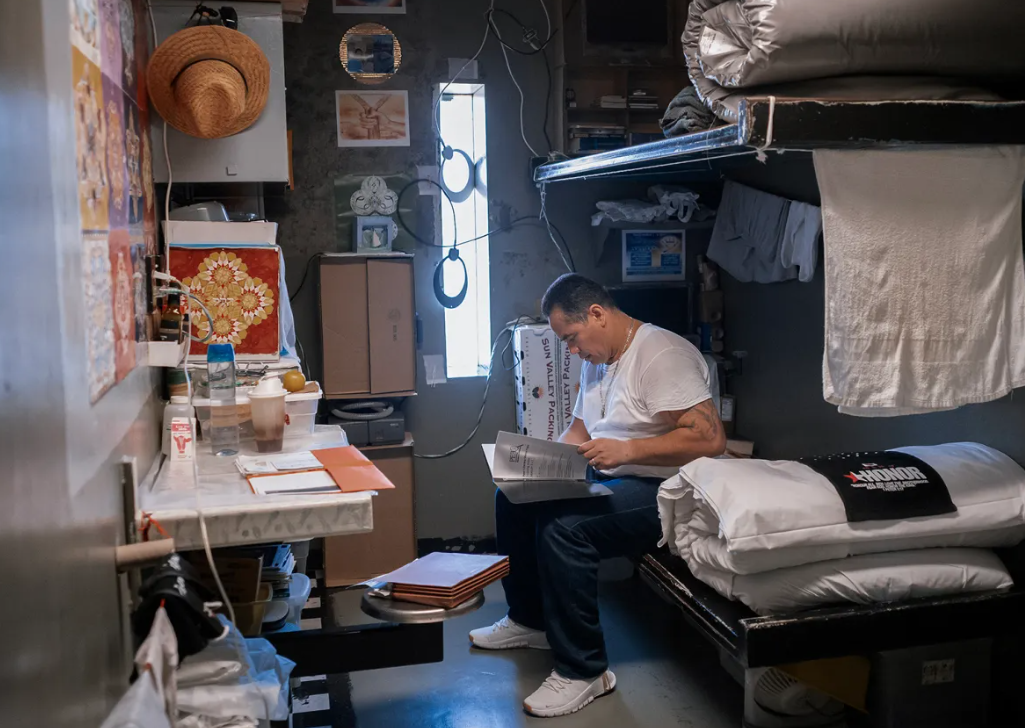
ohnny Morales struggled to find sleep. He dozed off for a few moments, but officers came to his death row cell and woke him a little after midnight. They needed to inventory and box up his belongings. He was leaving San Quentin.
Hands cuffed behind his back, he walked across the empty upper yard in the dim gray hours before daylight. An officer walked alongside him step for step, black latex-gloved fingers holding onto Morales’s arm.
For almost 20 years, Morales could only experience the world outside his 4-by-11 foot cell in the condemned housing unit like this — chained and escorted by officers. Security protocols required all death row residents be handcuffed or shackled any time they were out in open space with staff.
Other prisoners, unshackled and living under a lower security level, would be ordered to halt and turn their backs to the condemned — no eye contact or acknowledgement allowed.
But this caged and severely isolated existence was about to change.
Morales and hundreds of death row residents were gradually being transferred from San Quentin to facilities where they could be treated like any other prisoner…..