
Loch Lomond-Inveraray Castle-Lochgilphead-Oban
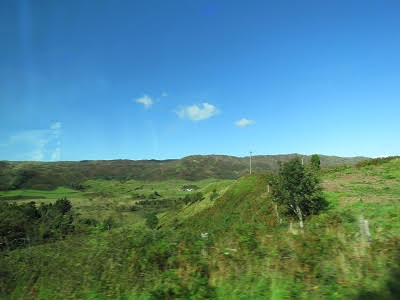
Today we boarded our bus in Glasgow and departed heading north for Oban. Along the way, we would be stopping at Loch Lomond and the town of Luss, Inveraray Castle, heading into the Highlands before arriving at the harbor town of Oban. Leaving the city, you began to notice more how green everything is. We also started to see small groups of sheep scattered around the countryside as well as small herds of cattle. We kept looking for the Coos (long-haired Highland cattle). Our first destination was the small, picturesque town of Luss, situated on the west bank of Loch Lomond.
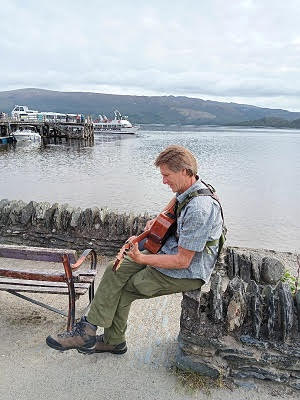
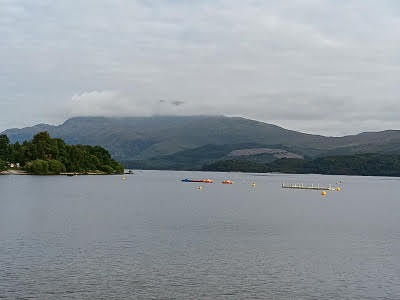
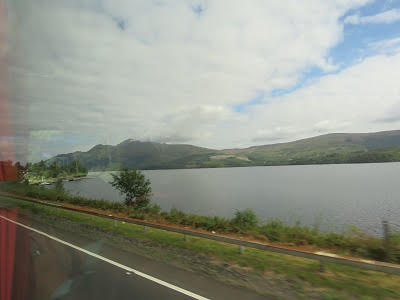
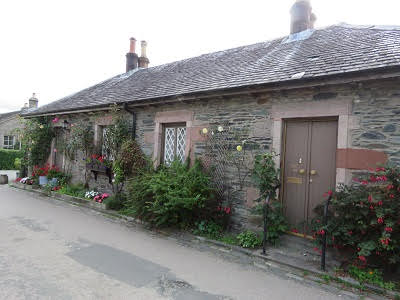
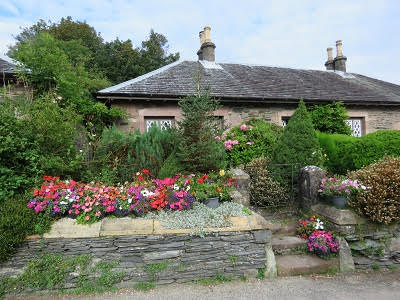
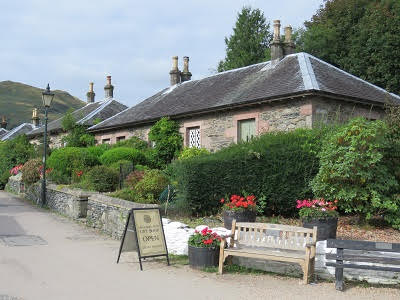
Loch Lomond is a freshwater Scottish Loch, a lake or sea inlet. It is 5 miles across at its widest point and 22.5 miles long. At 620 feet deep, it is one of the deepest lochs in Scotland. The loch is considered the boundary between the Highlands and the Lowlands. This loch forms part of the Trossachs National Park. There are many small islands in Loch Lomond, including Inch Murrin, the largest freshwater island in the British Isles. The Famous Scottish song, “The Bonnie Banks o’ Loch Lomond”, dates to 1745. Arriving in Luss, we parked and followed our tour leader Brian along narrow streets lined with stone homes and beautiful flower gardens in the yards. The homes are considered a historic landmark for the town. Many of the homes date to the 19th century. The small town only has 120 residents, but during tourist season, the town can swell to thousands, attracting 750,000 visitors a year. Luss is famous for kiltmakers and bagpipe makers. We walked down to a small dock where boats take tourists on a trip up and down Loch Lomond. Brian found an area to sit with his guitar and sang the famous “Bonnis Banks o’ Loch Lomond” song as well as a couple of other songs. After an hour or so, our group wandered back to the bus to continue on to an ABC (Another Bloody Castle).
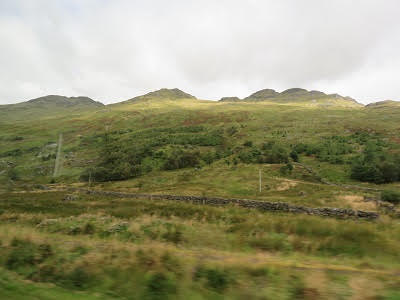
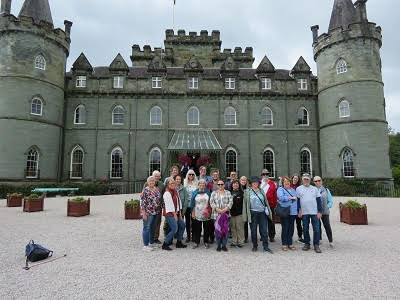
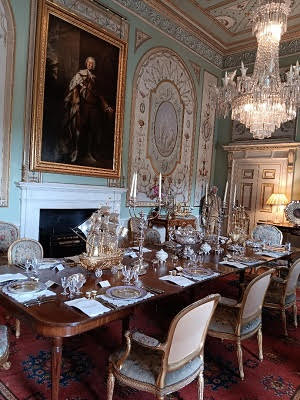
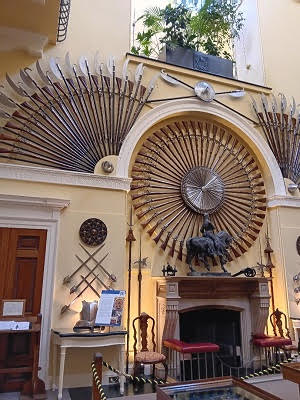
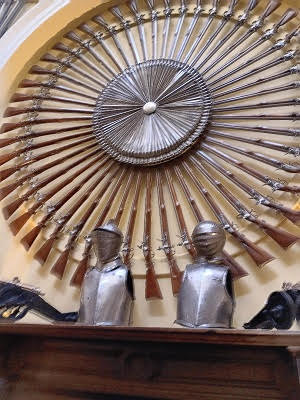
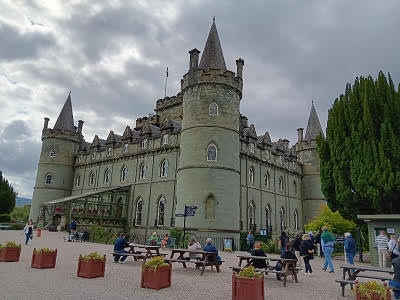
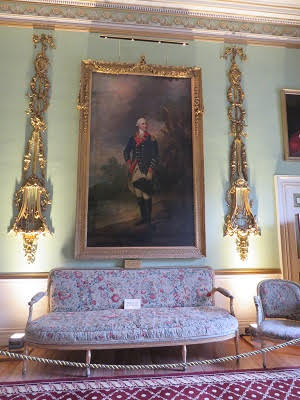
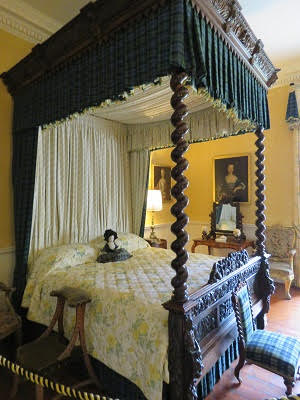
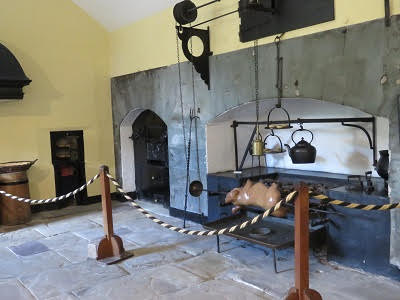
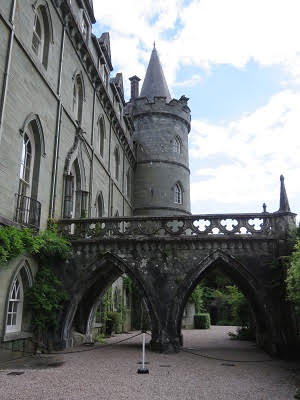
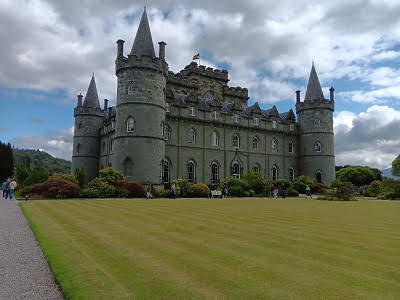
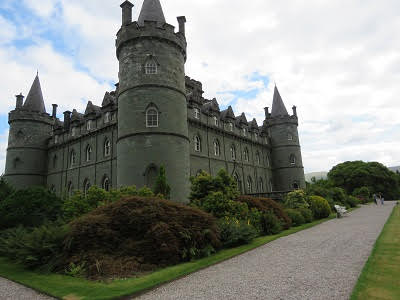
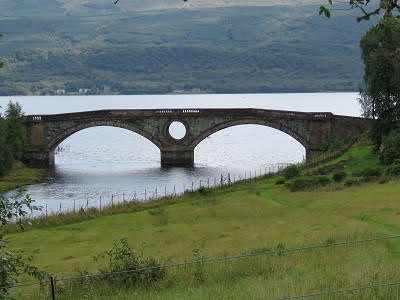
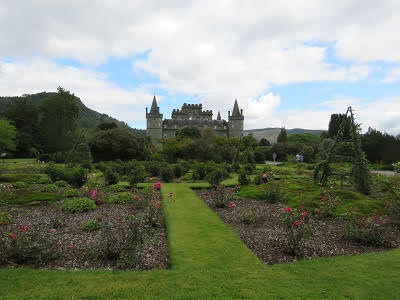
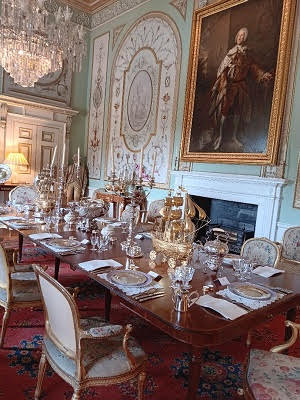
A while down the road, we arrived at Inveraray Castle, a majestic castle that is one of the earliest examples of Gothic Revival Architecture. Inveraray is considered a large country house, located in the county of Argyll on the shore of Loch Fyne. The old castle was built in the 16th century and was the seat of the Dukes of Argyll and the chiefs of Clan Campbell. The castle was remodeled in the Gothic Revival style in 1743. It is known for its collection of 1,300 pikes, muskets, swords and other weapons. You get a “Game of Thrones” feeling when you walk into the rooms containing these weapons. The castle is immaculate inside, well preserved and maintained as His Grace the 13th Duke of Argyll and his family live in private apartments in the castle. Tour guides spoke about each room as we wandered through the castle. The home is surrounded by 16 well-manicured acres, and the gardens have won numerous awards from many different agencies. The surrounding property of Inveraray sits on an estate of 60,000 acres. Income for the family comes not only from tourist fees, food and gift shops, but also comes from commercial forestry and tenant farming on the property and wind and hydro power as well as yearly deer stalking (hunting) that is allowed. Inveraray has been featured in several documentary films as well as in the 2012 season of “Downton Abbey”. After touring the castle and some of the garden area, we wandered to the front area where there was a small coffee hut set up. It was a little chilly, so I got a hot chocolate, made with Cadbury chocolate. The current Duke of Argyll, Torquhil Campbell, is married to Eleanor Cadbury, of the famous Cadbury Chocolate family. Cadbury Chocolate Company was founded in England in 1824.
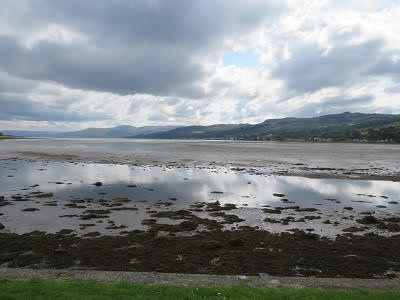
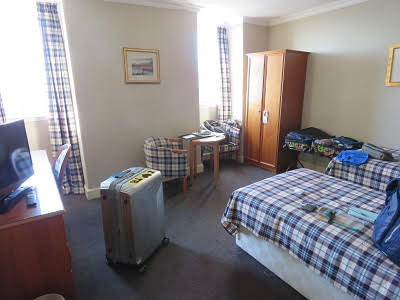
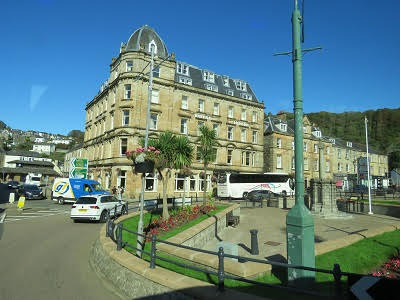
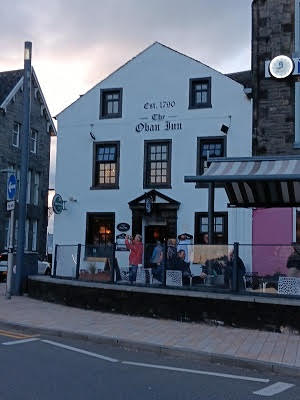
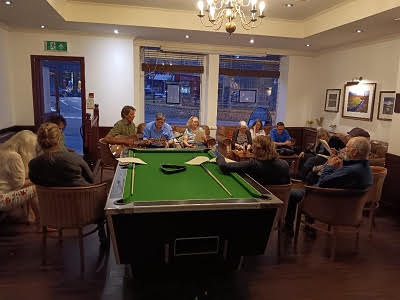
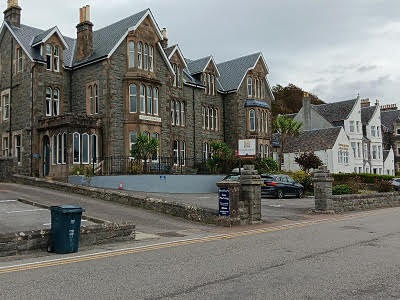
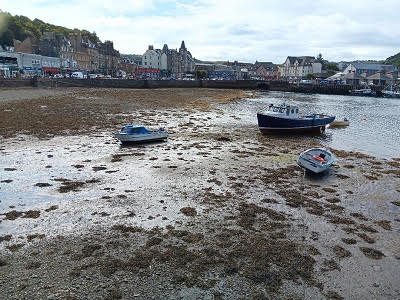
After several hours our group boarded the bus again, this time headed to Oban. We made a quick stop in the small town of Lochgilphead, by the Crinan Canal, that links Loch Fyne to the Clyde River. The tide was way out, making quite a picture of boats not sitting in water. We were about an hour away from Oban, heading north. Oban is famous for sea food, their harbor and the ferry terminals that take passengers to the Islands of Mull, Iona and Staffa. We would be staying in Oban for two nights. Our hotel was the Royal Hotel Oban, a Strathmore Hotel group. The original hotel was built in 1895 and has gone through some remodeling over the years. Our room looked out over the harbor area. It was listed as a 3-star hotel, which might have been a little generous. It was comfortable, but a bit creaky in the hallways and they tended to lean a little to one side. We had dinner at the hotel, which was good. After dinner we wandered to the Oban Inn. It was crowded in the downstairs bar, and the musician was mainly singing Rock and Roll songs. We wandered upstairs and found a great accordionist playing great Scottish songs. Finding seats, ordering some beers, we settled in for several hours of great music. When we left, the downstairs bar area was packed with lots of tourists and locals, also having a great time. Good start for our visit to Oban.
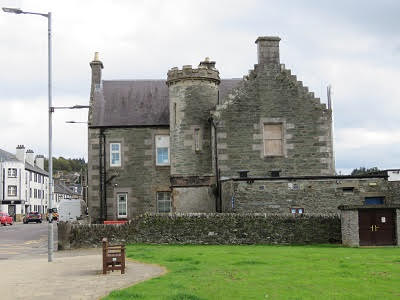
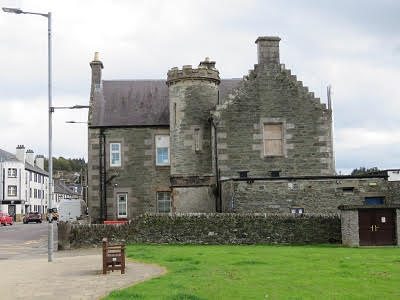
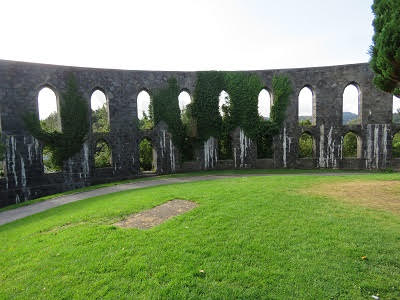
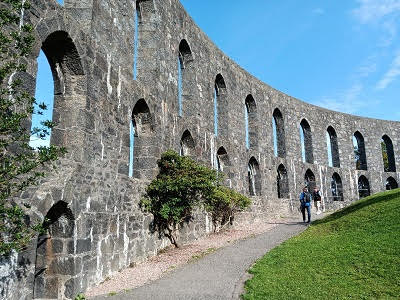
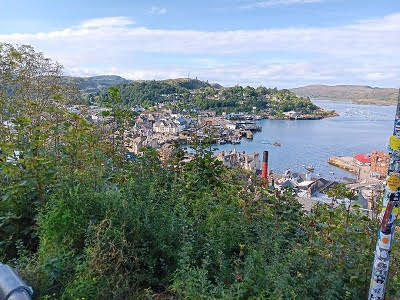
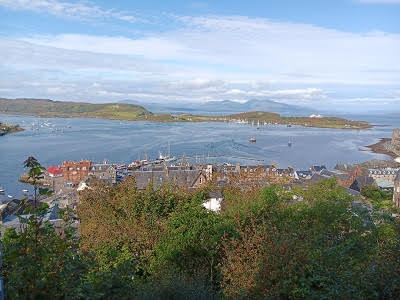
The second day in Oban began with a good breakfast and then we were on our own doing whatever we wanted to do for the day. Several in our group decided to take the ferry to the neighboring island of Mull, being reminded to not miss the ferry’s final boarding to return to Oban later in the day. Brian and I decided to wander the town and see what it had to offer. Oban has a population of about 8,000 people that swells to around 24,000 during tourist season. The modern town of Oban grew up around their distillery, but today it thrives on tourism and the ferry service to the islands of Inner and Outer Hebrides. It is also home to the Royal National Mod that occurs every 6-8 years. This is a celebration of the Scottish Galic culture. There is also an annual Highland Game held in the town. The first thing we did was get a map to the town and then figure out the best way to go up to McCaig’s Tower, an impressive monument built in 1897, financed by a local banker, John Stuart McCaig. He had it built to help out of work stonemasons find work in the winter and he wanted to leave a monument commemorating his family. Unfortunately, only the outer circular walls were completed before he died and the remaining family members no longer wanted to finance the unfinished construction of the project. Brian mapped out the streets we needed to take. I will have to admit it was a little higher than I imagined and there were more steps than I had pictured. But we made it, and the views of the town and islands were impressive.
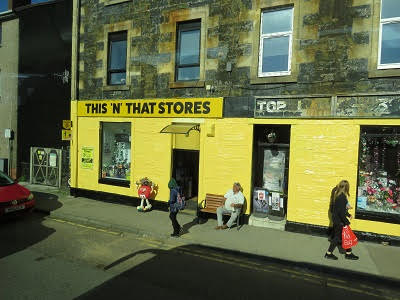
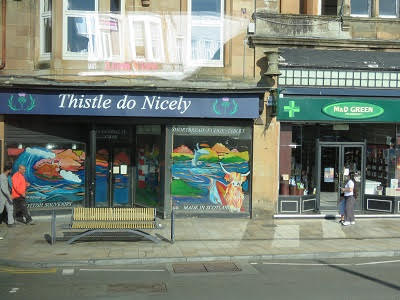
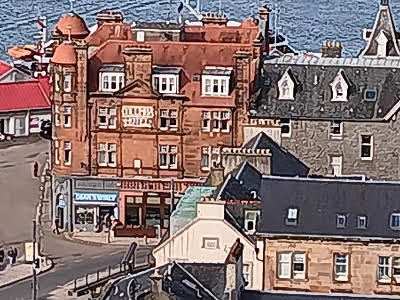
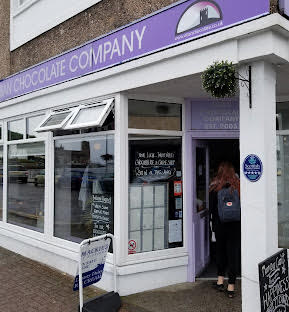
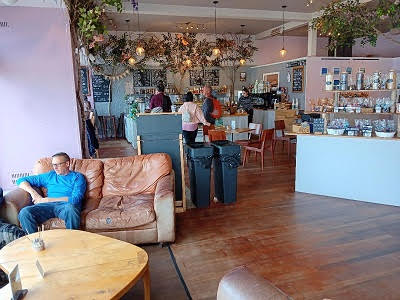
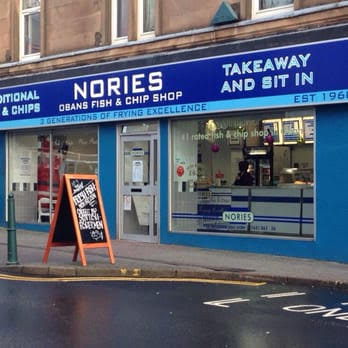
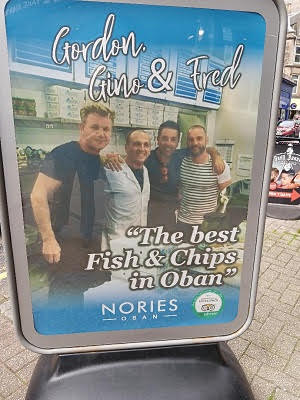
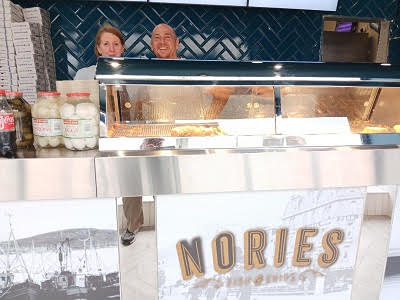
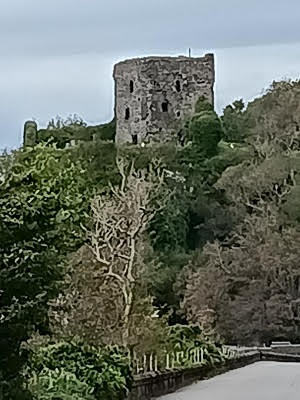
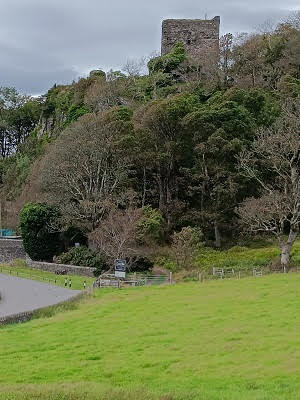
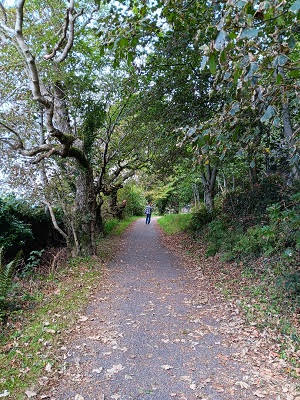
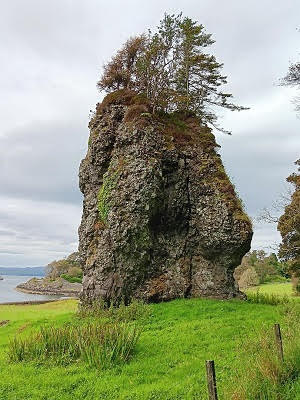
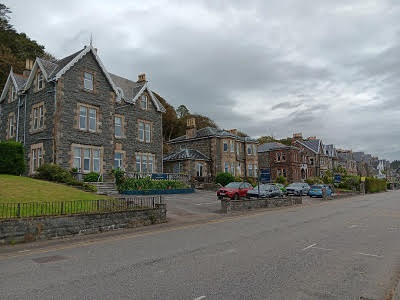
We took streets down, rather than the steps, and wandered through the hillside apartments and buildings. Reaching town, we walked down the street next to the harbor and found a busy place called the Oban Chocolate Company, established in 2003. Brian had a coffee, and I had hot chocolate. From here we wandered to the Oban War and Peace Museum. This small, free museum had quite a collection of items from various wars that citizens of Oban had been involved in, starting with WWI. They had a great collection of model ships and planes from different wars, especially sea planes. They also have quite a display of uniforms. It was a nice break and a quick trip back in time. We decided to walk to Dunollie Castle, a walk along the Esplanade along the harbor. We passed incredible, huge homes that were no longer used as private homes, but had all been turned into hotels, B&B’s or hostels. We made it to the castle grounds, but decided it was too pricy to see a castle that only had the tower remaining. It was first built in 600 and abandoned in the 10th century. It had been rebuilt many times and the existing ruins date to the 15th century. Walking back, we were hungry for lunch and Brian was a trooper and went with me to what is advertised as the Best Fish & Chips place in Oban, so crowned by Gordon Ramsey when he visited Oban. We ate in Nories Fish & Chips Shop, the oldest in Oban, with 3 generations of the same owners running the eatery. Brian got a deep-fried cheeseburger, something he had never had and probably won’t ever order again. He said it was unusual. I had a huge piece of haddock and great chips, with malt vinegar and an Irn Bru drink, a very sweet soda.
Walking back to the hotel, we rested a bit and then joined tour director Brian and other tour folks in one of the side rooms the hotel had and took part in a good old Scottish sing-along, mixing in some old standards as well. Whiskey was available for a toast or two. One member of Highland Way, who wasn’t able to come on the trip, was celebrating a birthday, so of course we toasted to his good health. If I haven’t mentioned it, each morning on the bus we toasted the day with a shot of whiskey from a new bottle one member of the group had bought for the day. Most of the time we also toasted after getting back on the bus in the afternoon after whatever site we had seen. After all we were in a country known for incredible whiskey distilleries, so why not take advantage.
After several hours we adjourned for the evening as our stay in Oban came to an end. Tomorrow we will be traveling to the Isle of Skye, but not before taking a bus ride, a train ride, a ferry ride and another bus ride.